





BibTeX | RIS | EndNote | Medlars | ProCite | Reference Manager | RefWorks
Send citation to:


URL: http://ih.richt.ir/article-8-79-en.html


2- PhD, Department of Architecture and Urbanism, Maragheh Branch, Islamic Azad University, Maragheh, Iran
Lack of sources hinders us from fully understanding the nature and impact of Buddhism on the thirteenth-century Iran. Yet, we can assume that the religion was fully tolerated and encouraged from the reign of Arghun (1284-92) to Ghazan Khan's conversion to Islam in 1295.
From Marco Polo, among others, we know that Tabriz in the thirteenth century was highly cosmopolitan (Polo, 1958: 57). As a major trading center on east-west and north-south trade routes, it ruled merchants, scientists, artisans and men of talent from all over the civilized world, most of which was controlled by the Mongols. Boyle has noted that Chinese physicians were at the court of Ghazan Khan along with Chinese artists, the groups who he assumes worked mostly in Buddhist temples (Boyle, 1958: 380).
The lack of Buddhist monuments from Mongol Iran is directly connected with Ghazan Khan's conversion to Islam in 1295. Apparently, Ghazan Khan was convinced by one of his generals, a Muslim called Nauruz, of the expediency of adopting Islam. At that time, Ghazan was battling his cousin Baidu for the throne and control of the Ilkhanid land. The value of leading Muslim troops as a Muslim and defeating "the last non-Muslim leader" of Iran was not lost on Ghazan. Despite his Buddhist upbringing and the Buddhist temples he had erected in Khurasan, Ghazan's first royal decree was for the destruction of all churches, synagogues, and Buddhist temples in Tabriz, Baghdad, and throughout his entire realm (Canby, 1993: 299). It is estimated that over the first three decades of Mongol rule in Iran, the Ilkhans collectively advanced half of their treasury for elaborate gold and silver Buddhist images at multiple sites across Azerbaijan and Khurasan (Boyle, 1968: 380). Dominican Friar Ricoldo da Montecroce noticed Buddhist priests known by the Turco-Mongolian term Bakhshi; while, Victor Mair demonstrated that the term Bakhshi entered Persian in the fourteenth century from the Tibetan Buddhist tradition (Mair, 1992: 119). Bakhshi did eventually morph Mongol usage into a general term for the men of learning with or without ties to Buddhism. At the court of Tabriz, however, Kashmiri monks in Arghun's retinue were clearly identified as Bakhshi; Rashid-al-Din recorded that it was Bakhshi who tested him with their riddles about the chicken and egg and other philosophical puzzles (Soudavar, 1996). Since the issue of Buddhism architecture in Iran has been less considered by scholars, investigating some specimens related to this phenomenon would be among the most important issues connected to the Ilkhanid architecture.
Buddhism in Mongolia
According to the Origins of Dharma in the "Hor" Regions by the great Mongolian Scholar "Lozenge Tamdrin", Buddhism came to the Hor region in different waves. The first Mongolian Buddhist wave began in the third century B.C. during the time of the Indian Emperor "Ashoka", three centuries before Buddhism took root in China and some eight centuries before it became firmly established in Tibet. Traditionally, Mongolians recognize their second highest incarnate lama, "Zaya Pandita", as being an emanation of Emperor Ashoka, perhaps in the honor of this early connection. According to Lobsang Tamdrin, Ashoka extended his empire northward all the way to the Silk Road and eventually captured the city of "Khotan". Khotan was the westernmost region of Hor and thus a part of Mongolia in Lobsang Tamdrin’s eyes. Emperor Ashoka was a strong Buddhist and actively promoted Buddhism as the national religion of all lands under his governorship. From Khotan, Buddhism gradually spread eastward to the Mongolian Gobi kingdoms along the Silk Road. Lobsang Tamdrin comments that even in these ancient days, Hor supported a population of over 100,000 Buddhist monks.
Cave paintings along the Hor section of the Silk Road certainly witness an early Mongol enthusiasm for Buddhism.
The second great wave of Mongolian Buddhism began with "Chinggis Khan" and his sons and the special relationship that Chinggis established with the "Sakya" School of Tibetan Buddhism. Indeed, Chinggis’ grandson "Kublai" went so far as to have his Tibetan guru, "Chogyal Pakpa" (known to Mongols today as Pakpa Lama) create a special form of the Tibetan Buddhist script for using in all territories under his governorship. This script, known as the "Pakyig", continued as the formal script of choice by the Mongol emperors who came thereafter and was in common use for Mongol Buddhist literature until the next wave took hold three centuries later. In fact, one theory holds that "Kublai" intended to use this script for all purposes throughout his empire and replace the Chinese and Uighar scripts with it.
Kublai Khan’s strong dedication to Lama Chogyal Pakpa and his brand of Tibetan Buddhism is strongly documented in “The Journals of Marco Polo”. Marco Polo had been charged by the Vatican Pope with the task of converting Kublai to Christianity. However, although Kublai was happy to sponsor Christians in his court and retain them as advisors, he personally remained strongly Buddhist. Marco Polo laments this fact in his journals, attributing his failure to convert the Khan to the superior skills in paranormal activities such as telekinesis demonstrated by Chogyal Pakpa.
Chogyal Pakpa’s biography (still not available in English translation) records many Buddhist Tantric lineages and teachings that this great lama gave to Kublai Khan and his inner circle, a testament to the dedication that this great khan held for the enlightenment tradition. The fall of Mongolian rule in China and according rise of the Ming from Nanking saw the retreat of the Mongols to their original territories, the north of White Wall. Eventually, the lack of strong Mongol leadership and the division of the remaining regions of the empire among the princely khans also saw a decline of the Buddhist movement and accordingly Buddhist art and architecture (Mullin, 2012).
Mongol Rulers in Iran and the Evidences of Buddhism Architecture
Following a Tantric revival in and around Tibet, Buddhism, supported by the Mongol rulers, remained the second major religion in Inner Asia beside Islam (Papas, 2011). A pivotal period of cultural exchange between Tibet and Islamic world occurred during Mongol period. During the thirteenth and early fourteenth centuries, the Ilkhan Mongol rulers in Iran maintained close relations with Tibetan Buddhism. With the help of Arabic, Persian, Tibetan, Syriac, and Armenian sources, we can trace the extensive Tibetan presence in the Ilkhanid court in Tabriz where most of the rulers were Buddhist and their spiritual advisers were lamas (Bakhshi).
The first Ilkhan, Hulegu (Tib. Hu la hu or: Hu la; reg. 1256-65), was a follower of Buddhism like his brother Qubilai in China. We also know that Hulegu, who already ruled in Iran, had a representative in Tibet who is named in several Tibetan sources as Go go chu (Kokochu) and through this representative, Hulegu maintained his jurisdiction over a number of areas in Tibet (Papas, 2011). Hulegu’s contacts with Kashmiri Buddhist communities began early in his career and continued to feed the currents of Ilkhanid Buddhism (Davidson, 2002: 161).
A Buddhist temple at Raziq-Abad near Merv, built by Arghun in 1250 and another one in Tabriz, purportedly included a mural with Arghun's portrait (Esin, 1972: 53).
An interesting testimony of the link between Geikhatu (reg. 1291-95), the fifth Ilkhan, and Tibetan Buddhism is found on a coin minted in his time which includes his Tibeto-Mongol religious name: Rinchen Dorje (rin chen rdo rje, meaning‘precious diamond’) in its Mongolian form in Arabic transliteration in addition to the Muslim profession of faith (Poole, 1875: 32). Ghāzān (reg. 1295-1304), the seventh Ilkhan, grew up as a Buddhist. Rashīd al-Dīn tells us that Ghāzān’s grandfather, Abāqā, surrounded him with Buddhist lamas and hence, he maintained a great affection for their religion. According to Rashīd al-Dīn, Ghāzān spoke Tibetan. He also patronized and constantly consorted with lamas who came from Tibet and Kashmir and were very influential among the Mongol upper classes up to his generation (Martinez, 1994: 99).
Construction Principles of Buddhism Temples
Shelter for the Monks and stupa as monuments to memorialize the Buddha and his teaching defined the physical requirements of Buddhist architecture for many centuries. Symbolic and ritual requirements gradually transformed such elements into what probably can be called Buddhist temple compounds. A stupa was originally used to mark the relics of the Buddha or one of his principal disciples, significant objects (such as his begging bowl), or places related to his life or sanctified by his presence. At the same time, however, the structure of such a memorial stupa incorporated cosmogonic. Rituals related to such cosmogonic and cosmological beliefs must have been carried out around large stupas such as those constructed at Sanci, Taxila, or Amaravati. Small stupas were often used as votive markers of a follower's devotion, set up by laity as well as the members of the Buddha's order (samagha). Initially, as a great teacher who had transcended the cycle of birth and rebirth through his teaching, the Buddha himself was not the focus of the devotional practice. Standing both for his presence and for a Buddhist conception of universal order, the stupa took on its own devotional aspects; shelters were constructed for the stupa and its worshipers as in the structural stupa-shrine at Bairat or the excavated (rock-carved) stupa-houses (Chaityagrha) at Guntupalli and Junnar. From these early enclosed stupas, evolved a major type of Buddhist structure, the Chaitya hall, housing an object used as a factor for worship (Chaitya). The earliest of these at Bhaja and Bedsa date back to the second or first centuries B.C., the largest, at Karli from the first century C.E., and the latest, at Ellora, from perhaps the early seventh century C.E. Located on trade routes and patronized by the merchants and others from nearby urban centers, these large establishments also provided monastic cells for wandering monks and abbots and sheltered pilgrims and travelers (Charles, 1987:374).
The transition of Buddhism and its monastic architecture from India via Central Asia was the first and the only significant time in China's history that a monumental architectural tradition was fully established but in sharp contrast to the native one. Buddhism introduced the new concept of the cave temple for worship to Chinese architecture. In pre-Buddhist China, a few imperial tombs had been carved into rock, but the non-funerary religious and imperial architecture was exclusively freestanding. Yet, by the fourth century, following the model of famous Indian and Central Asian sites, Buddhist rock-cut cave-temples were excavated at Dun-Huang in northwestern China; they were found a century later at Yun-kang near modern-day Ta-t' ung and subsequently, at the scores of other sites throughout the country (ibid).
Similarities Between Iranian Specimens and Buddhism Monasteries
In 439 A.D., Emperor "Taiwu" of Northern "Wei" conquered the Northern "Liang" (北涼 397 - 439 AD), an important Buddhist region since the Eastern Han and Sixteenthe Kingdom periods and reunified Northern China. On this occasion, many Buddhist devotees, craftsmen, as well as most of the rich were transferred from Gansu to Pingcheng, creating a large concentration of manpower and material resources which once added to the support of the emperor and the aristocracy, allowing Buddhism to quickly flourish in Pingcheng and the whole North China in the second half of the 5th century (Su Bai, et.al, 1996).
To date, the earliest Buddhist monastery ever excavated in North China has been Yungang Monastery, located about 15 km from the west of Pingcheng, the first capital of the northern Wei. In coordination with the protection project of the "Yungang Grottoes" (雲岡石窟) in 2010, the Shanxi Provincial Institute of Archaeology carried out a joint excavation along with the Yungang Institute and the Datong Municipal Institute of Archaeology at the top of the cliff, where the Yungang Grottoes were carved (Fojiao et.al, 1993).
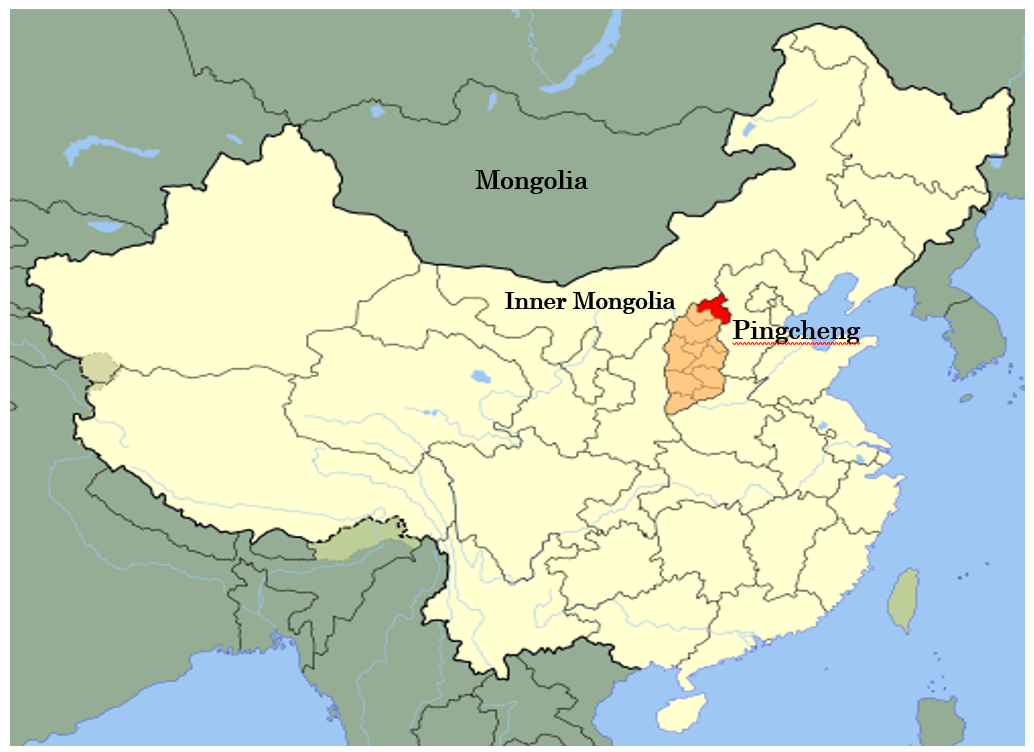
Fig.1. The Location of Pingcheng in northern China
The monastery, rectangular in plan, displayed a pagoda (A), marking the center of the sacred area and cells (G) set side by side against the perimeter wall (Fig. 2).
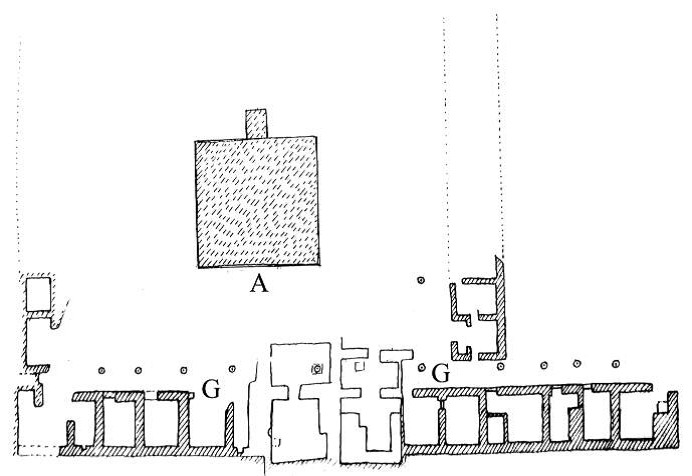
Fig. 2. Sketch plan of Yungang Monastery (Modified from Li Chongfeng, 2013)
The remains of the pagoda (A) was the most important building in the whole monastery, consisting merely of its base. According to the archaeological reports, the rammed earth base was almost a perfect square in plan, whose northern and southern sides measured 14m; while, the eastern and western ones were 14.3m long; it was accessed from the south through a 2.1m wide and 5m long inclined ramp. The whole base displayed a stone masonry facing. There was no underground palace or no relics at the center of the base of the pagoda. Against four sides of the perimeter wall, the rows of small cells (G) were set next to one another.
Research data show that the early caves of Kizil were cut in a vertical cliff before the 4th century, reaching their peak in the 5 - 6th century. Central pillar caves were the most common and distinctive cave type of Kucha (Su Bai, et al., 1996).
According to their location in the site, each group which normally focused on one or several central pillar caves might be a Buddhist monastery (Zhengzhong, 2004: 75). Such arrangements can be regarded as the transmutation of the surface monastery, focusing on the pagoda into rock monasteries (Fig. 3).
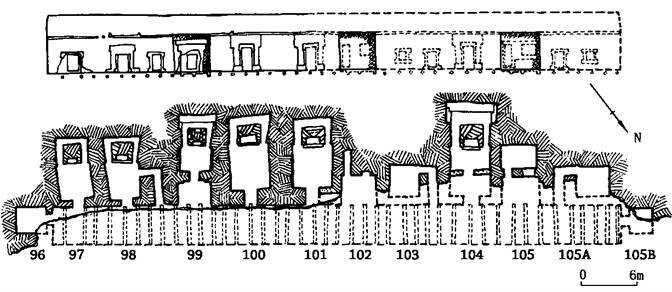
Fig. 3. Sketch plan of caves 96 - 105B in Kizil Grottoes (Modified from Wei Zhengzhong, 2004)
Central pillar caves still prevailed in the cave-temples of Dun-Huang and Hexi Corridor Region 河西走廊地區 during the Sixteenth Kingdom Period (317 - 439 A.D.). The Grottoes of "Tiantishan" in "Wuwei" 武威天梯山石窟 were initially built by "Juqu Mengxun" 沮渠蒙逊, the king of Northern Liang (北凉 397 or 410 - 439 AD); they are supposed to be the famous "Liangzhou Grottoes", recorded in the ancient texts. Under the influence of the grottoes of "Xingjiang", the central pillar cave was the most representative grotto type in "Tiantishan”; thus, the sculptural theme represented around the central pillar had a close relation with the Buddha of Three Ages that is past, present, and future, as narrated in the sutras (Ligun He et al., 2013).
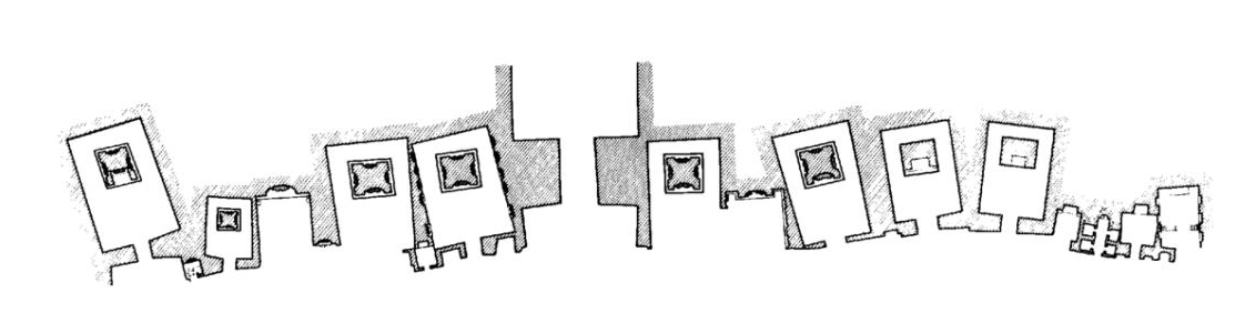
Fig. 4. Sketch plan of early caves in Dun Huang Grottoes (ibid)
Rasadkhaneh cave in Maraghe _ the early capital of Mongols in Iran_ has a ground level and an underground area. At the ground level, a forecourt leads to what Ball calls an antechamber which has been cut into the western oriented limestone hill face. Chiseled on the ceiling is a football-sized rock-cut relief of a concentric circle and dotting the wall niches that once held a small rectangular wooden door. The antechamber leads through very distinctive upward-pointed pentagonal openings to two slightly elevated adjacent chambers in the east and south, respectively. Each encloses a rectangular block of limestone some 1.2 meters high, standing on a plinth (the block is cut out of the mountain rock and fixed in) with a chiseled concave roof. The southern chamber also has a stepped niche with a rounded back, looking much like an eroded Mihrab. Two sets of corridors lead around and to the lower chambers (No. 2), a corridor winds around the back of Chamber 3 and leads through a small round opening only about 1m high. Beyond this, is an underground passage, ending in a room with blackened walls (marked "a") situated just underneath Chamber 3. A similar trajectory winds from the southeastern corner of the antechamber to a room underneath Chamber 4 above it. The walls of the underground corridors are dotted with lamp niches as well as larger concave niches that must have held items. In the north of the forecourt (No.1) along the face of the mountain, there are numerous small chambers with little semi-circular windows, large concave shaped niches, and small lamp niches. Much of the exterior part of these caves has crumbled and no original decorations or inscriptions remain. South of the forecourt along the face of the mountain is a shallow cave with three rock-cut tomb chambers (No. 5) that are now exposed and empty. Over a distance of some 50m towards south, there are five semi-circular cave openings; but, these are filled with earth and are inaccessible without excavations. It seems that these are openings to more chambers or burial sites based on the previous suggestions of Bowman and Thompson (Azad, 2010: 216).
The rectangular stone blocks in chambers "a" and "b" (Fig. 5) might represent the same blocks in Buddhism monasteries in Kizil Grottes and Dun Huan specimens in the northern China.
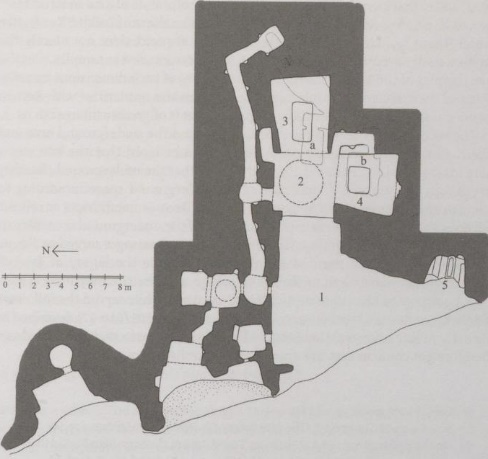
Fig. 5. Plan of Rasadkhana cave in Maraghe, northwestern Iran (Ibid)
To Ball, they looked like the Buddhist circumambulatory pillar caves of Afghanistan and Central Asia (Azad, 2010: 218).
Zakariya Ibne Qazvini reports that: "… In the outskirt of Maraghe, there is a cave in which chambers have been carved in the shape of rectangular rooms. Here, there are stone benches which probably were used to carry the sculptures. At the moment, there is a tagged sculpture similar to a kind of a curse which would damage someone who tries to get closer" (Qazvini, 1994: 642). According to Qazvini who died in 1303 A.D., the religious application of Maraghe's cave has been confirmed (Fig. 6). Hence, the architectural accordance with Buddhism monasteries as well as historical reports and Ilkhanid background of this site show that it might have been used as a Buddhism monastery during Mongol invasions.
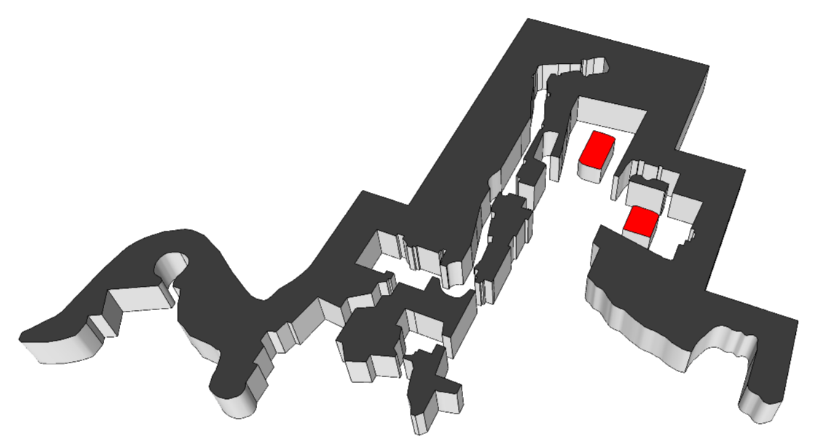
Fig. 6. A 3D sketch of Rasadkhana cave and the position of stone benches in it (Author).
A combination of a Buddha hall and surrounding monastic residential cells has appeared in Girkh Kuhul caves, in Kahjug Village, 20 km of the southwestern Maraghe. These caves have been carved in a rock cliff, divided into two northern and southern sections (Fig. 8).
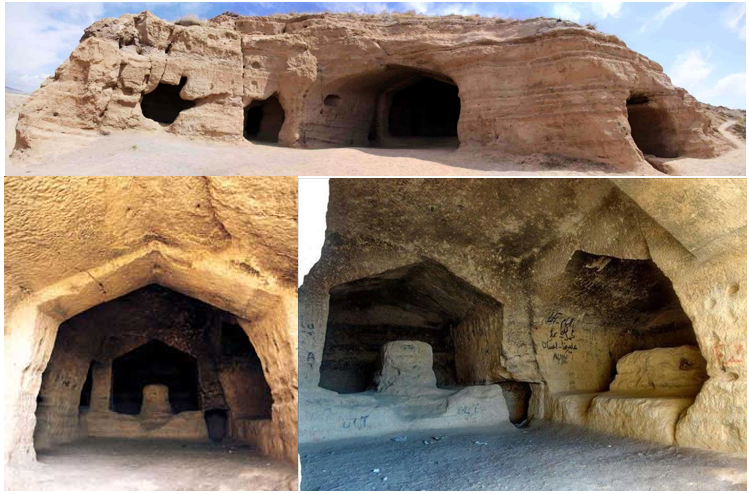
Fig. 7. Rock cut architecture in Maraghe City, northwestern Iran
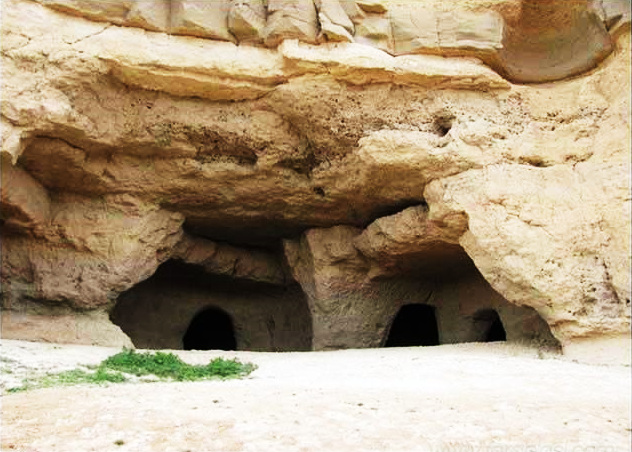
Fig. 8. The entrance of Girkh Kuhul caves in Kahjug Village
These units are located about 25m from each other. Here, the maximum dimension of chambers does not exceed 20 square meters and the sign of stone benches at the level ground might represent the same idea of Buddha's sculpture placement at a glance. Although there is no datable finding from these caves, the selection of this region as the early capital of Mongols and the combination of semicircular cells and the sculpture hall has kept its original form which can be seen in North China's temples (Fig. 9). The close geographical and political collusion between North China, Inner Mongolia, and Mongolia should be considered as the probable reasons in sharing the same architectural mentalities.
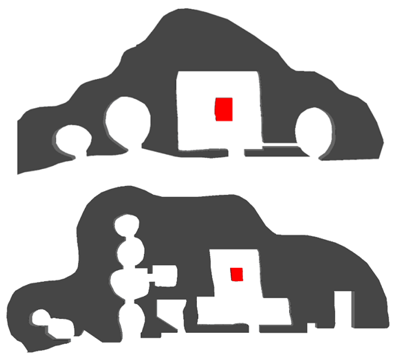
Fig. 9. Plan of Girkh Kuhul caves (Author).
Conclusion
From the first century B.C., South Asian Buddhists focused much of their rituals and worship on the stone or brick mounds and stupas containing the relics of the Buddha. Some stupas were found in large and open-air complexes that were the focus of pilgrimage by the Buddhist laity. Other smaller stupas were located within the worship hall, Chaityas, of Buddhist monasteries carved into the sides of the cliffs. In each case, the people who created these temples had to decide how to present the stupa for worship. In both cases, the designers had to accommodate the highly individualistic nature of Buddhist worship while attempting to provide some mechanisms to foster group cohesion within the developing Buddhist community. Monks designed their own ritual spaces with the goal of allowing for the mediation of worship by the ritual specialists. Further, the architectural layout of different stupa complexes suggests that the laity were mostly interested in the individual and meditative rituals. According to the results, caves curved in rock cliffs both in Rasadkhana as well as Girkh Kohul had the same language of Buddhist architecture in North China, including the main hall and surrounded rooms. From this point of view, Mongol invasion and the cultural transition from Central Asia should be considered as the most probable interpretation for this phenomenon.
Acknowledgements
The authors thank all those who helped them writing this paper.
Conflicts of Interest
Authors declared no conflict of interests.
Received: 2019/05/20 | Accepted: 2019/06/15 | Published: 2019/07/1
| Rights and permissions | |
 |
This work is licensed under a Creative Commons Attribution-NonCommercial 4.0 International License. |