


BibTeX | RIS | EndNote | Medlars | ProCite | Reference Manager | RefWorks
Send citation to:


URL: http://ih.richt.ir/article-8-83-en.html


2- Islamic Art University of Tabriz, Tabriz, Iran
When the discussion topic is minbar, the purpose is probing all its dimensions, structural form, physical composition, as well as static features as a whole skeleton inside mosques. This sacred unit reveals unity and solidarity fields of a mosque in terms of an independent religious module. Although establishing a specific framework in order to define clear boundaries for its structural appearance is considered as a purely scientific matter, categorizing it into subordinate branches has been among the most controversial subjects related to the mosques. However, the significant effect of various architectural, mental, and philosophical schools of specific periods should not be underestimated in the formation of the minbar. To put this into perspective, the Ilkhanid masons had distinguished their structures by increasing the dimensions of their buildings compared with their Seljuk counterparts (Ajorlo, 2010), the fact that deformed the whole structure of the buildings in the transition phase between the Razi architectural style to the Azeri one with its direct reflection in the contemporary minbars. What the structural analysis of Ilkhanid minbars suggests is that these Minbars are inclined to reach the maximum possible height parallel to the architectural large-scale movement of the same ages. In search of a logic development flow of minbars, this project aimed to investigate the historic background of minbars during the Islamic civilization and then clarify the structural form and the additional complementary units of Minbar in the course of 5th to 13th centuries.
Historic Background
Generally, Minbar has been considered as one of the most prominent practical units in every mosque. Before focusing on its characterization and background, it would be better to get familiar with the concept of minbar. Minbar is a derivative of an Arabic word for which the Persian term “Korsi” and the English word “Pulpit” are the most common equivalents, respectively. In Amid and Dehkhoda encyclopedias, minbar has been highlighted as a platform or even an elevated place where the prayer leader stands to deliver his sermons. The originator of this concept has defined it as follows: “A platform where the speaker sits and lectures the congregation” (Amid, 2012: 978). In the Persian literature, there have been countless terms such as Korsi, Orang, Serir and Takhtgah, which in terms of form and physical combination have close ties to minbar and are sometimes used interchangeably for it; this is while the application of the mentioned furniture is different and has not been used for just lecturing, but for the sitting and judgments of the kings as well (Golmohammadi, 1996: 45) (Fig. 1).
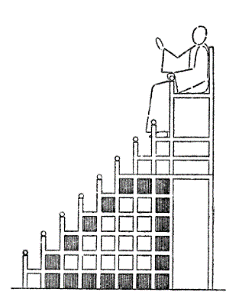
Fig. 1. The position of the preacher on minbar (Bloom, 1998).
Despite altar, minbar has never reached international acceptance; since, its application and validity have been limited to the Jami mosques (Hillenbrand, 2012: 46). Minbars have always been positioned by the wall which marks the direction of the qiblah, to the right side of the mihrab (Tabatabai, 2012: 716), following a particular construction method of a staircase flanked by two upright triangle panels. From its very early phases, minbar has had its own specific form, thoroughly distinguishable in its evolution. Burckhart claims that “the general form of the minbar follows Prophet Mohammad’s tradition, including a narrow continuous staircase and a handrail (Burckhart, 1986: 104).
Admittedly, the very initial appearance of minbar has been directly connected to the life of Prophet Mohamad; because, he delivered his sermons to the prayers by leaning up the mosque’s column. Wooden minbars are among the masterpieces of the Islamic ages, demonstrating creation, innovation, and aesthetics of the wooden arts perfectly. Muslim craftsmen have tried their best to create their handicrafts, adopting Prophet Mohammad’s lifestyle (Golanduz, 2012: 7). Based on the reports, the first minbar in the Islamic world was a wooden platform, including two stairs and a single platform, located in the middle axis of qiblah that faced the prayers and was made by Tamarix. It formed the stereotype of the later specimens by adopting some additional stairs (Fig. 2).
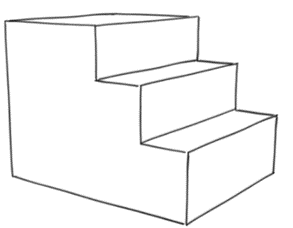
Fig. 2. The recreated sketch of the first probable minbar (authors).
The oldest wooden minbar in the Islamic world was made of teak in the Jami Mosque of Kairouan, Tunisia, dating back to 246 AH. This minbar consists of eleven steps, limited by two rows of downward partition. This minbar is a part of the Umayyad period and some parts of it are kept at the Museum of Cairo (Hillenbrand, 2012: 85) (Fig. 3)
In Iran, well-decorated minbars have been known in the fifth and sixth centuries a limited number of which are available while many have remained unknown (e.g. minibars of the Jami Mosque of Frizhand Mosque, Bidhand, Nain, and etc.) or have disappeared owing to deterioration, atmospheric reasons, fire, and unexpected events. The minbar of Abyaneh Mosque dating back to 466 AH, the Seljuk period, is one of the oldest and safest existing minbars in Iran, which has four steps flanked by two vertical flitch beams with a forming a doorway frame to the first step (Khansari, 1999: 222) (Fig. 4). This minbar and other known wooden minbars of Iran will be introduced during the following pages.
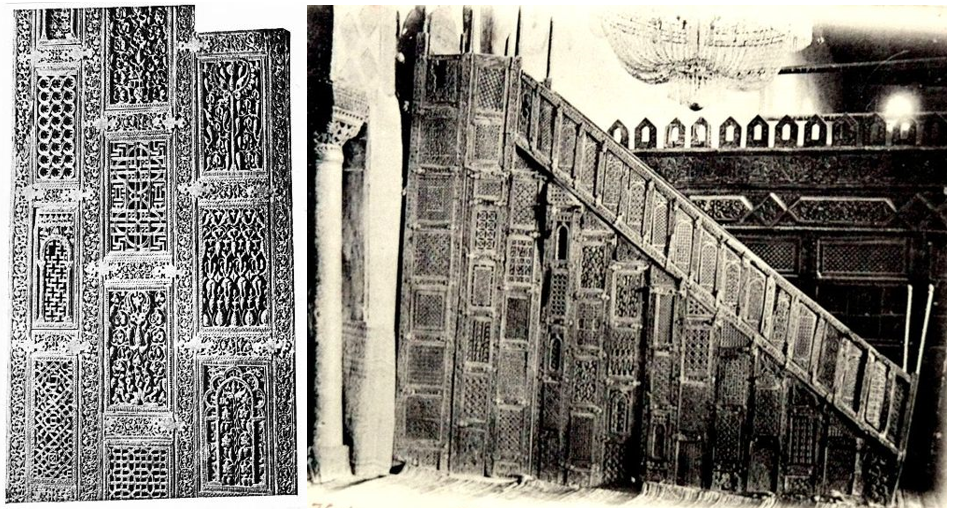
Fig. 3. Minbar in Jami Mosque of Kairouan; the oldest specimens of wooden minbar in Islamic world (Burckhart, 1986: 103).
Investigating the Form of the Minbar
The wooden minbars in Iran follow a suitable pattern of form and almost all of them are made in a distinct framework, which look similar to each other at the first glance; but, the evolution of the form can be clearly seen in them. The minbar from the beginning found a special shape and the same shape was quite distinct in its later evolution, the triangular panels of which are more closely aligned with the girih tile technique and the stairs with mortise and tendon joint lie between them; handrail, a doorway frame, and an arched roof were added to them later.
In the studies, we are witnessing the formal evolution of the minbar in different periods, which have evolved and advanced from its simple form. In general, if the evolution courses of the wooden minibars are examined, the followings can be mentioned:
-
Stairs′ elevation: These changes took place almost from the Seljuk period and the minbars with four stairs and more are seen from that time.
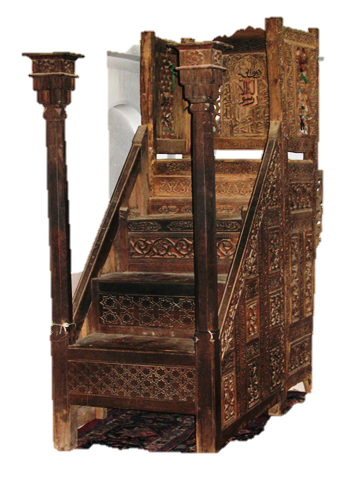
Fig. 4. Minbar of Jami Mosque of Abyaneh (Author).
-
Installation of handrails: The minbars left from different periods were enclosed by handrails alongside the stairs and the platform.
-
Installation of wooden fitches ahead of the first step: In the minbers of the Seljuk period, the beams which in some cases were decorated with Muqarnas are well-visible.
-
During the next phases the doorway in front of the stairs accepted the wooden leafs. In the minbar of Jami Mosque of Nain, this doorway-like form is observed which was decorated with girih tiles.
-
Installation of wooden leafs inside the aforementioned frame: The minbar of Jami Mosque of the Surian Bavanat, related to the Timurid period is one of the minbars with a doorway and wooden frame, it seems that the leafs was added to the minbars from the Timurid period.
-
Extending the main panels and creating a chamber on the last step: In the minbars of the Jami Mosque of Nain and Goharshad, a small wooden chamber can be observed. Based on the evidences, the wooden chamber has been added from the Ilkhanid period to the minibars structure.
The mentioned cases are mostly true for the wooden minibars of Iran and Shiites. Although the minibars of other Muslim countries have distinct forms from Iranians, their overall structure is almost the same (Sohrabi, 1991: 91).
The Form Evolution of the Minbar
As mentioned in the previous section, form evolution in the wooden minbars of Iran has passed six stages over different periods. The minbar has had a relatively significant transformation as an aesthetic form. The elevation of the steps compared to the primary minbars and the increase of the vertical flitch beams in the remaining wooden minibars from Seljuk period are clearly visible. Although the increase of the stairs and their elevation were considered to be a sign of arrogance and protested by some scholars, the elevation of the stairs of the minbar was believed to lead to the proximity of the preacher to Allah and the relationship with God; each step represents a degree in the hierarchical world and the relation between them signifies the relation between the earth and the sky or the baptismal space outside and the holy space inside (Karbasian, 2012: 75). Each of these six trends of development is studied as follows:
1. Stairs' Elevation: As mentioned above, the primary minbars had two steps and their elevation resulted in a new shape of the minbar. This change is evident by adding two stairs in the minbar of Jami Mosque of Abyane. But, the remarkable point in that is increasing the height of the first step compared to the next steps, which is almost twice the next steps; it is likely that the first step was separate, so that during the preach of the preacher, it would be installed across the minbar and after the preach, it would be removed. Almost all of the wooden minbars from the Seljuk period have been made in the same way, and the first step is higher than the others so that a single step is seen at the top of the minbar (Fig. 5). This type of a separated staircase was mostly used in the seats of the Kings and is visible in the remaining miniatures.
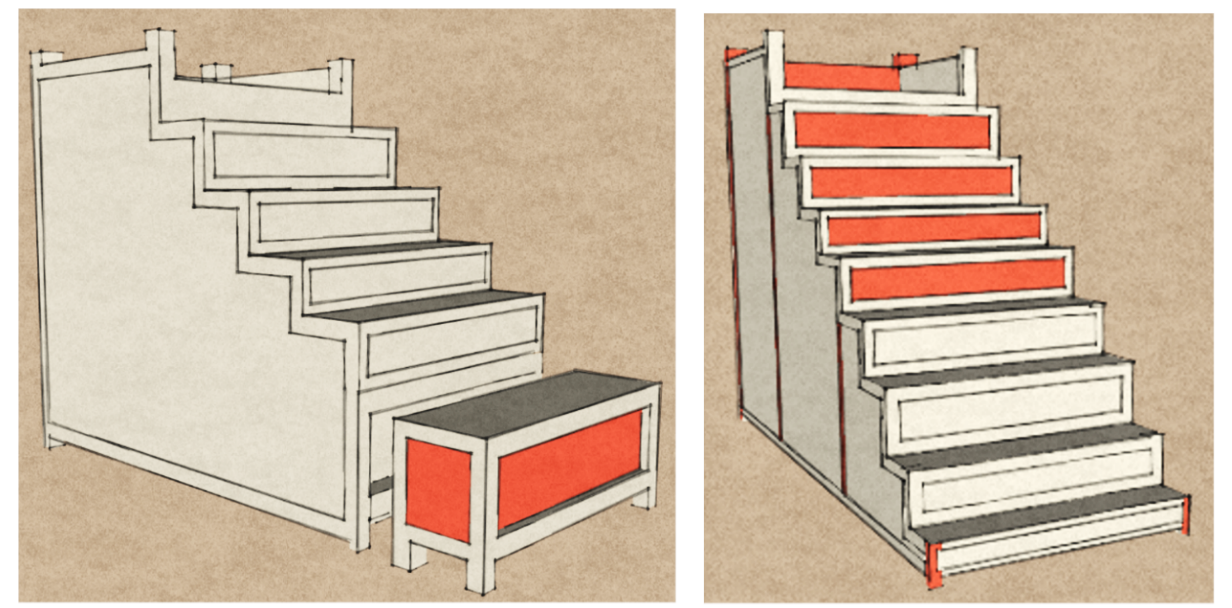
Fig. 5. Right: Elevation of the minbar; Left: Separated stair across the minbar (Author).
2. Increased Handrails: Almost all of the wooden minbars left from different periods in Iran are enclosed with handrails next to the entrance stairs and the platform. These handrails are mostly used to protect the preacher while walking up the minbar and sitting on the platform. In some minbars, wooden handrails have been made simply with a wooden beam (Fig. 6) and in most of the minbars, these units have been made using girih tiles beautifully.
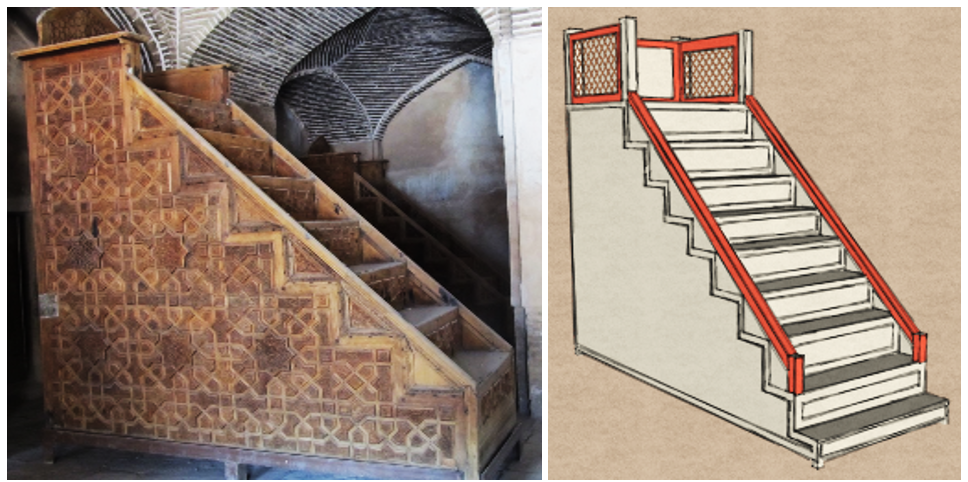
Fig. 6. the Installation of handrails in Jami Mosque of Isfahan (Author).
3.The simplest form of the handrail at the edge of the steps is in the minbar of the Jami Mosque of Isfahan, which is seen as a diagonal downward beam (Fig. 7). This type of the fence is less visible in the wooden minbars since most of the fences have been made with the higher elevation for the better performance.
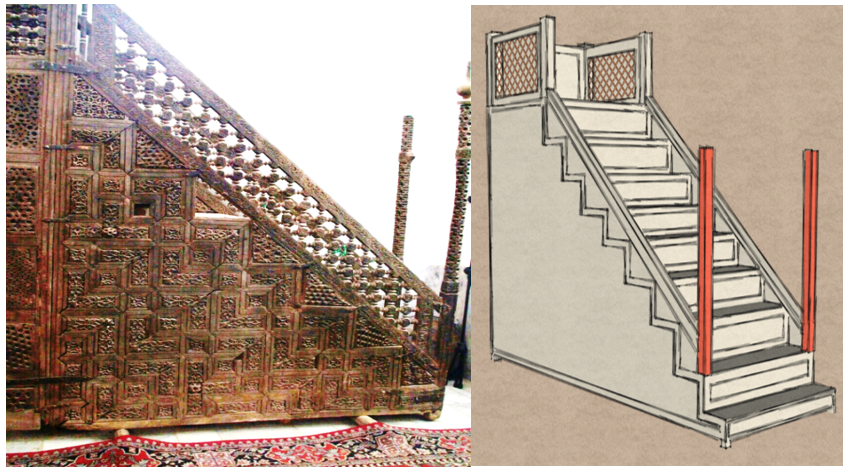
Fig. 7. the Installation of bilateral flitch beams in Farizhan’s mosque (Author).
4. The elevation of the flitch beam in front of the first step is also seen in the Seljuk period, as in some minbars, these beams have had carvings, muqarnas, or turnery. These two bars were used as the symbol of the entrance of the minbar and might have had decorative uses (Fig. 8). The minbars of Jami mosques of Abyaneh, Frizhand, Barzroud, Nain, Mashkul, and Saravar of Esfahan, all belonging to the Seljuk period, have decorative beam on the first step. The two beams aside the gate are the sign of keeping the sky so they are considered as the gateway to the heavens, the passage which is necessary to enter the worship place. This passage between the two vertical flitch beams represents the arrival to a new life, another world, or eternity, and therefore shares something with the symbols of the doorway and gate (Karbasian, 2012: 195). These two vertical units in the minbars of the next periods became the simplest form of the doorway, suggesting a type of entrance to the minbar for a viewer.
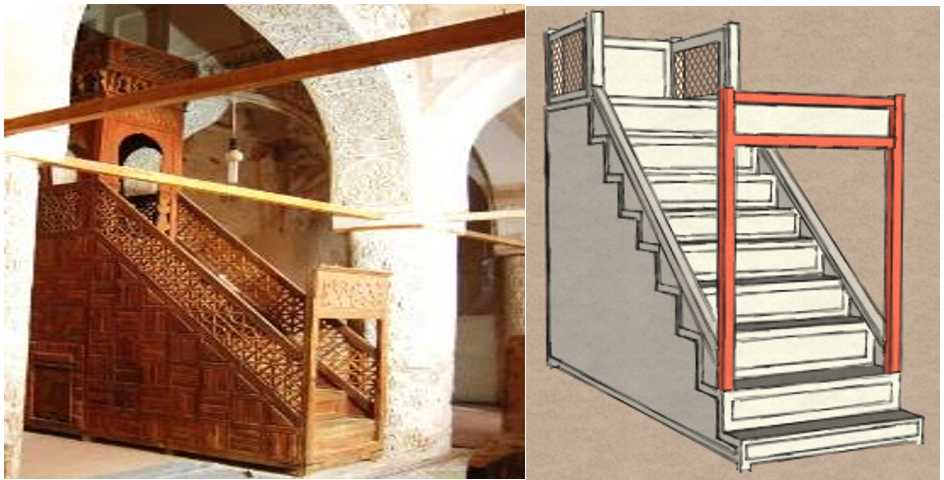
Fig. 8. the simplest form of wooden doorway frame in the Jami Mosque of Nain (Author).
5. The simplest form of the doorway across the stairs: The doorway or gate in the wooden minbars, the simplest form and type of which is most often seen in the Seljuk period and other periods as well, are formed after placing two flitch beam on the first step of the minbar and their connection in the upper part of the doorway or gate of the minbar. It is worth to mention the doorway (gate) of the minbar in the Jami Mosque of Nain (711 AH) as one of the most beautiful samples (Fig. 9). The doorway of the minbar signifies the entry to a mystical position; then, everyone who enters this doorway and approaches the Lord and wants to bring the Lord close to the ordinary people must pass through the passage from blasphemy to the sanctum, from the outer ominous atmosphere to the inner sacred space, entering the new world as a symbol of the border and the cross section of nature and supra-nature (Karbasian, 2012: 8).
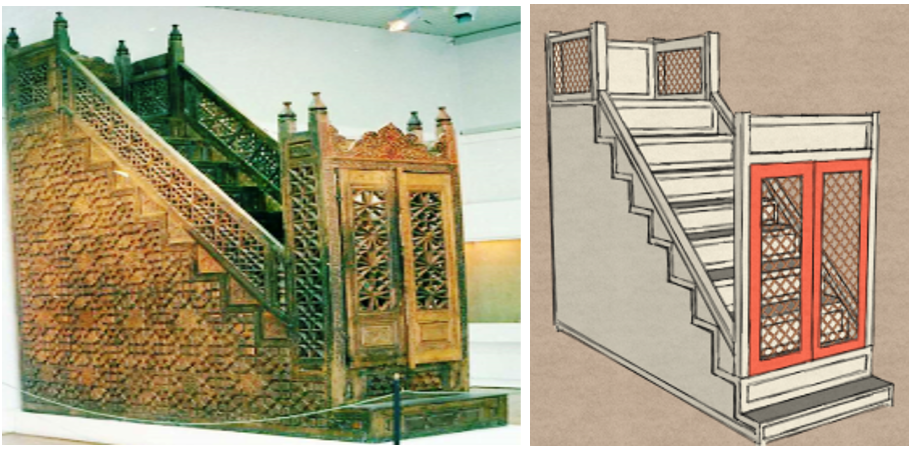
Fig. 9. The installation of wooden leafs in Saurian minbar (Author).
6. Precise Installation of the doorway in the entrance of the minbar: Each door or entrance has major and functional roles. From the functional roles of the doorway or gate, providing and monitoring communication, control, penetrability, convertibility, diagnosis and readability, admission or inviting can be mentioned. In order to better understand the concept of the door, its role in the field of architecture, i.e. internalism and privacy can be emphasized. It seems that the use of wooden minbars has also been important in preserving the preacher's safety so that no one would enter the steps of the minbar during the speech of the preacher. This was to maintain the respect of the preacher or speaker (Fig. 10).
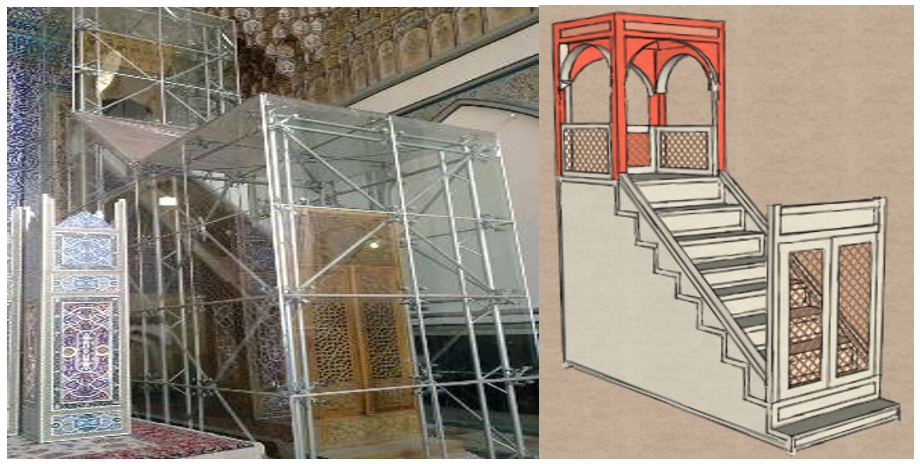
Fig. 10. the installation of chamber room in Goharshad Jami Mosque (Author).
The minbar of Jami Mosque of Surian Bavanat Fars (771 AH) is one of the beautiful examples whose entrance door has been decorated with girihs of 6 and 8.
7. Extending the main bars and creating a chamber on the last step: It may be argued that the upper chamber of the platform (the wooden chamber) was merely due to the respect for the preacher and a kind of decoration for the wooden minibars although the chamber has been less visible in the wooden minbars of Iran (Fig. 9). While, the minbars of the Arabic and Sunnite countries have more decorations and embellishments in dome or circular forms. Dome shape was always a sign of the heavenly and metaphysical power in the minds of the viewers and the spherical shape of the heavens, the moon, and planets also reinforced these beliefs. Therefore, special attention to dome forms and their construction was not merely for meeting mechanical and technical requirements and it also met spiritual and psychological needs and expectations. The minbars of Jami Mosque of Nain and Goharshad Mosque are the only minbars with wooden chambers. The wooden chamber of the minbar of Jami Mosque of Nain is more magnificent and has been able to attract more attention with its more decorations. The minbar of Jami Mosque of Ghaen also has a wooden chamber, but its chamber is without any covering and much simpler.
Table 1. Investigating the structural elements of the well-known wooden minbars in Iran (Author)
|
Structural Elements |
Date |
Tittle/Minbar |
|||||||||
|
Flitch Beam |
Wooden chamber |
Protector and Fences |
Wooden Leaf |
Doorway Frame |
Number of Steps |
||||||
|
ü |
- |
ü |
- |
ü |
4 |
466AH |
Jami Mosque of Abyaneh |
||||
|
ü |
- |
ü |
ü |
- |
4 |
541 AH |
Mashkul Mosque |
||||
|
ü |
- |
ü |
ü |
- |
4 |
926 AH |
Jami Mosque of Voshnaveh |
||||
|
ü |
- |
_ |
ü |
- |
4 |
546 AH |
Jami Mosque of Nadooshan |
||||
|
ü |
ü |
ü |
ü |
- |
5 |
543 AH |
Imam Zadeh Barzeroud |
||||
|
ü |
- |
ü |
- |
- |
5 |
Seljuk period |
Imam Zadeh Frizhand |
||||
|
- |
- |
- |
- |
- |
4 |
Ilkhanid period |
Jami Mosque of Snagh |
||||
|
- |
- |
- |
- |
- |
4 |
without date |
Jami Mosque of Saravar |
||||
|
ü |
ü |
ü |
ü |
- |
8 |
711 AH |
Jami Mosque of Nain |
||||
|
- |
- |
ü |
- |
- |
7 |
Ilkhanid period |
Jami Mosque of Isfahan |
||||
|
ü |
- |
ü |
- |
- |
10 |
771 AH |
Jami Mosque of Surian |
||||
|
- |
- |
ü |
- |
- |
7 |
781 AH |
Jami Mosque of Zafreh |
||||
|
ü |
ü |
ü |
ü |
ü |
8 |
1082 AH |
Jami Mosque of Ghaen |
||||
|
ü |
ü |
ü |
ü |
ü |
14 |
Qajar period |
Jami Mosque of Goharshad |
||||
|
- |
- |
- |
- |
ü |
7 |
1008 AH |
Jami Mosque of Eghlid |
||||
Conclusion
In general, the architecture and its components in Iran have gradually evolved under the influence of various climatic factors, local traditions, ethics, local thoughts, and beliefs in transition from different periods of time. Thus, the evolution process of the minbar during the Seljuk period is not an exception. Following the principles governing social beliefs based on the earthy state of its place, the mosque, minbar has taken shorter proportions and more applicable decorations. With transition from the Seljuk period to the Ilkhani era, the elevation of the wooden minbars made the dominant form of this era along with the changes in the dimensions of the buildings for changing the religious attitude to provide high-rise buildings that make access to God possible. The collapse in the architecture of the Safavid era has had a direct impact on the architectural elements as well. During this period, along with the decline of previous traditions in the stretched and elevated proportions, the creation of the minbar seems to be an unconscious recursion to the Seljuk examples. In conclusion, the role of all periods in the formation of the wooden minbars and its evolution can be seen.
Acknowledgements
The authors thank all those who helped them write this paper.
Conflicts of Interest
Authors declared no conflict of interests.
Received: 2019/05/20 | Accepted: 2019/08/15 | Published: 2019/09/1
| Rights and permissions | |
 |
This work is licensed under a Creative Commons Attribution-NonCommercial 4.0 International License. |