





BibTeX | RIS | EndNote | Medlars | ProCite | Reference Manager | RefWorks
Send citation to:


URL: http://ih.richt.ir/article-8-80-en.html


2- Department of Social Anthropology, Iranian Research Institute for Cultural Heritage & Tourism, Tehran, Iran ,
Hubble-bubble is consists of a water container, a glass or pottery connected to a wooden or metal pipe at the top of which there is a censer, and a pipe adjoined to the middle of hubble-bubble through which the smoke is sucked. Hubble-bubble is called «Hoqqa» in India, «čelam-čelim» in Afghanistan, «Nafas» in Syria and «water pipe» in English (Razpoush, 2001: 261). In France, (Binder, 1991: 251,252), Turkey and Europe, it is called «Nargileh» derived from the word «nalikerah» in Sanskrit which means coconut, already used as the container. (Razpoush, 2001: 261). In some dictionaries, one can find the following explanation for the word hubble-bubble: a device to smoke tobacco mostly with a glass water container and a censer on it. In hubble-bubble, the smoke goes through the water and is sucked up by a wooden tube adjoined to the base. (Anvari, 2002: 6). Iranian hubble-bubbles are made just like the Turkish ones; but, in Iran, a short red wooden tube, changed with another one after a while, is used instead of a long one (Najmi, 1991: 519). Some people believe that it has been called hubble-bubble because water bubbles in the container. Hubble-bubble is called (qalyân) and pronounced differently in various dialects and languages of Iran. For example, it is pronounced «qailon» in Bakhtiâri clan.
Hubble-bubble was brought to Iran in Safavid era and became popular among different social classes and changed into a social-cultural phenomenon very fast. Thus, Safavid kings banned using hubble-bubbles in some periods, cutting the users’ noses and lips in case of violation but these measures didn’t decrease the usage rate.
Documents show that the German «Adam Olearius» was the first who mentioned using tobacco and its popularity in Iran. Later, «Don Garcia De Silva Figueroa», the Spanish ambassador, sited tobacco and hubble-bubble in his travelogue. In this regard, other non-Iranian authors and travelers such as, Jean Chardin, Jean Baptiste Tavernier, Cornelis de Bruyn, Engelbert Kaempfer, Benjamin, Henry Binder, Jakob Eduard Polak, Giovanni Francesco Gemelli Careri, Abraham Valentine Williams Jackson, Gaspard Drouville, Henry René D'allemagne, Sanson, Carla Serena, Willem Floor, Ernst Holtzer, and etc. can be named.
Also, in 1536, «Ahli Shirazi», the Iranian poet, has mentioned hubble-bubble in his poems. After «Ahli Shirazi» and the increase in using hubble-bubble in Iran, many officials, travelers, and authors studied on the shape and methods of using hubble-bubble and tobacco. The most important studies include «A Glance at the Emergence of Hubble-Bubble and Cheek in Iran» by Semsar published in 1963 in «Honar-o-Mardom» Journal and hubble-bubble entry in Iranika encyclopedia written in 2001 by Razpoush. Afshar and Bamdad are two other Iranian researchers who have worked on hubble-bubble.
Iranians’ ancestors used hubble-bubble as a hobby in their free time as well as their mourning ceremonies and funerals. Different kinds of tobacco such as Khansari, Kashani, Naini, Biarjomandi, Jahromi and etc. were grown and consumed in Iran. They were totally natural and hubble-bubble users didn’t overuse them but today people overuse hubble-bubble and unnatural fragrant tobaccos. The epidemic consumption of these tobaccos has caused great concerns and is considered as an immoral behavior and anomaly. Many studies on hubble-bubble and tobacco have been done by the medical centers to find new ways of preventing the bad effects of misusing them. Therefore, the cultural, social, and historical aspects of hubble-bubble usage have been less considered. This essay proceeds to different parts of culture such as habits, moods, hobbies, free time, addictions, arts, literature, and etc. It is descriptive because of its anthropological nature and the historical information has been gathered based on the social heritage, traditions, and beliefs.
At the beginning, hubble-bubble entered Iran from the south and became diffused across Iran with some changes in the kind of tobaccos and hubble-bubbles. The theory of diffusion emphasizes the cultural similarities and transformation and the reasons for the similarities of cultural phenomena in different cultures and their transformations. Diffusionists believe that changes are rooted in the environment and the cultural characteristics of the source culture are transferred to the target culture through neighborhood. Diffusionists don’t believe in the discovery and invention abilities of the cultures that much. They mostly believe in acculturation and imitation abilities of the cultures. Therefore, they usually look for the rules of time and place displacements in these phenomena. Actually, the diffusion process has always moved on two axes; one is the geography which follows cultures in different geographical zones and the other is the ages of different phenomena through which the ages of cultural elements are determined. Here, we are going to study hubble-bubble and tobacco in Iranian culture within this theory.
Methodology
This research has been done using a descriptive anthropological methodology besides library studies as well as filed works. In this research, none of the beliefs and habits have been denied or confirmed just like any other research. Instead, the physical and spiritual manifestations of hubble-bubble using rituals in the personal and social lives of its users or opponents have just been studied. The content has also been analyzed from the historic anthropological point of view. Also, the study of hubble-bubble and tobacco and the methods of using them and the changes during recent decade have been considered.
The Emergence of Hubble-Bubble in Iran
In 1492, when Christopher Columbus could cast anchor close to an island known as Cuba today after a long struggle, he saw that the natives had a roll made of the dried leaf of a plant. They fired its one end and sucked the other end and inhaled its smoke. This caused them to feel inebriated and not tired. The natives called the roll «Tobaccos». The Spanish sailors learnt about tobacco and imitated smoking. Christopher Columbus never thought that these roles which were similar to toys once become the close companions of many people around the globe. Besides čopoq (pipe) which was an imitation of the European pipe, Iranians invented another device to smoke tobacco, called «hubble-bubble» (Semsar, 1964: 14). We don’t know anything about the exact emergence date of hubble-bubble in Iran, but based on Cyril Elgood’s notes which don’t mention the reference, the Iranian scientist and physician in Akbar Shah’s court (Indian Gurkanids), Hakim Abol-Fath Gilani (1588) passed the smoke of tobacco through a small bowl of water to cool and refine it. In this way, he invented «hookâh» or «hubble-bubble». (Razpoush, 2001: 263; Navaie, 1987: 2). Based on the evidences, Portuguese (1507) and Iranian merchants who entered Iran from the southern ports in Safavid era made smoking common in Iran (Razpoush, 2001: 261). Around 1538, the British had the monopoly on tobacco commerce (Chardin, 1995: 707). Ahli Shirazi (deceased in 1535) has composed the following poem about hubble-bubble:
It can be said that in 1535, 29 years after the entrance of the Portuguese into Persian Gulf, the use of hubble-bubble became common in Iran (Semsar, 1964: 14). Chardin mentioned the tobacco of Susiana, Hamadan and Kerman as the best ones (Chardin, 1995: 706). Using hubble-bubble was not that much common in the beginning of Shah Abbas’s reign but it became more common since the middle of his reign (Ravandi, 1990: 232). The first picture of hubble-bubble has likely been drawn by Reza Abbasi, the famous painter of Shah Abbas's court. This water-color picture known as «Našmi Kamândâr» portrait was drawn in 1629. On this portrait, one can see a hubble-bubble on the right hand of Shah Abbas and the burnt charcoal emitting smoke on its censer which shows he has puffed or wants to puff it. A pitcher with the shape of a nun’s head or probably an Iranian young man’s head decorated with a furry hat can also be seen. His dazzled look causes him to seem inebriated (Kanbi, 2006: 225,263; Semsar, 1964: 15, 16). (Fig.1).
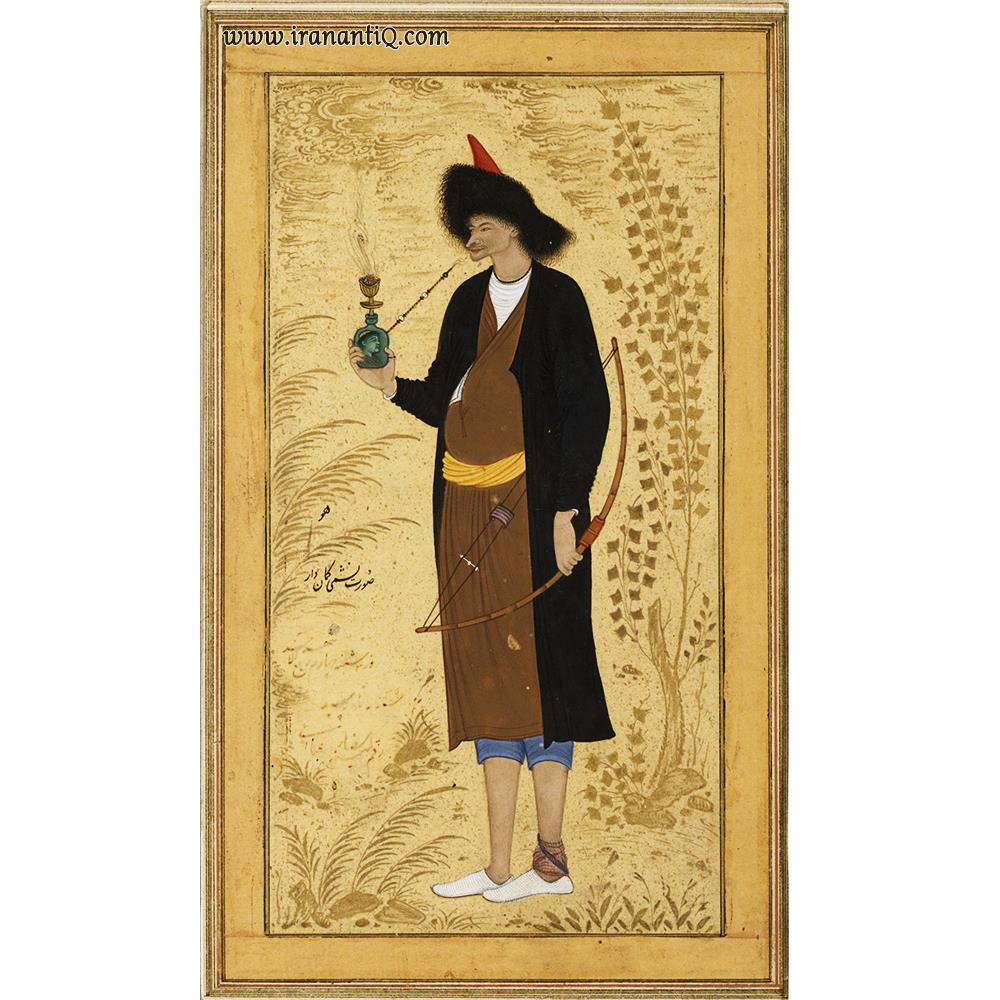
Fig. 1. Nashmi-e- Kamandar; Drewn by Reza Abbasi (Ibid).
In Shah Safi ′s era, the king usually holds a party at the end of Ramadan. In this party, the king smoked tobacco besides drinking wine (Floor, 1978: 79). Using hubble-bubble was so common in Shah Suleiman Safavid ′s era that the king used it on his trips as well (Sanson, 1967: 107). Most men and women were used to smoke tobacco by hubble-bubble so much that some of them believed it was impossible to quit it. (Tavernier, 1990: 639). At the time of Shah Sultan Hussein’s coronation, there were many teahouses in Isfahan in which people could use hubble-bubbles (Jmly Karry, 2004: 169,133). Karimkhan Zand liked hubble-bubble too. On a picture drawn in 1779 by Mohammad Sadegh, one can see him using hubble-bubble (Rahnavard, 2007: 320). It was also common to use hubble-bubble in Qajar era. Fath Ali Shah and Nasereddin Shah used it in «Salâm» ceremonies (Mostofi, 1963: 541). This is confirmed in a wall-painting of Fath-Ali Shah in «Salâm» ceremony by Abd-ollah Khan in 1230 (Rahnavard, 2007: 322).
Hubble-Bubble ′s Prohibition
Hubble-bubble and cigarettes are prohibited among Zoroastrians because they believe these things contaminate fire (Jackson, 1978: 410). In the Safavid era, it was a concern that smoking must be religiously lawful or not. Some of the religious authorities thought that smoking was unlawful because there was not such a thing in Prophet Mohammad’s era. But other authorities believed that smoking was lawful and even some of them thought it didn’t break fasting (Mahboubi Ardakani, 1989: 231-232). But, based on the treatises of some religious authorities, whatever hurts human body should be prohibited or recommended not to be used. It was very common to use hubble-bubble in Shah Abbass I ′s era; then, the king decided to quit smoking himself first with the hope of people following him but they didn’t. (Razpoush, 2001: 263). It is said that once in a formal party Shah Abbass ordered the servants to fire the guests' hubble-bubbles with dung instead of tobacco; then, when they were smoking, he asked them: «How is the tobacco that my minister in Hamadan has sent? ». He then claimed that it was the best one in the world. All the guests admired it. The king got angry and said: «Damn with this tobacco whose smell doesn’t make any difference with dung smell». Finally, he banned tobacco. Anyway, despite all the oppositions of Safavid kings and some religious authorities with tobacco, smoking spread in Iran very fast (Chardin, 1995: 709,710; Mahboubi Ardakani, 1989: 231-232). When Shah Safi prohibited hubble-bubble, he punished the violators by pouring hot lead into their throat or bringing out their eyes (Tavernier, 1990: 524). This prohibition reduced the court ′s income so the king decided to cancel it (Razpoush, 2001: 263). As mentioned above, smoking was common among Safavid kings. Even after the fall of Safavid dynasty, the following kings would use hubble-bubble. The portraits of Karim Khan Zand and Fath Ali Shah Qajar show that they also used hubble-bubble. Fath Ali Shah had forbidden hubble-bubble at his presence except for his son, Mohammad Qoli Mirza, «Molk-Ara», who had the permission to smoke in the private parties in the absence of his brothers or in royal ridings (Razpoush, 2001: 264). Mohammad Qoli Mirza Molk Ara was Fath Ali Shah’s third son and Zahir-oddoleh’s step brother. He became the governor of Mazandaran when he was eleven (Bamdad, 1968: 343). Using hubble-bubble was common for a while in formal Salam ceremonies in Qajar era. The hubble-bubble used in Salam ceremonies of Qajar kings is now kept in Royal Jewelry Museum. Using hubble-bubble was quite common even in the ordinary parties. The great supreme religious authorities had hookah holders who accompanied them in all parties. In such parties, hubble-bubbles were brought sooner or later based on the guests’ situation, a matter which caused much resentment. In Reji event, smoking tobacco and hubble-bubble became prohibited by Mirza Hassan Shirazi’s proclamation. In this, he announced that: «From now on, smoking tobacco means fighting with Imam of time, Mahdi». Based on this proclamation, people left tea houses and hubble-bubbles at the same day. Consequently, some people attacked Ark of Tehran that caused a battle and some were killed. Finally, the government had to revise the contract. Those days’ people came out and read some poems: «I’m a hubble-bubble user lady. I’m sick of hubble-bubble. Look at my clothes, go and bring hubble-bubble. The prince has ordered to fight with gun and bullet. Go and bring hubble-bubble. The Europeans have called me a mouse. Don’t beat me. The tobacco bag is on my shoulders. I go to Europe to sell it».
The above poems were sung until the contract was canceled; then, people sang the followings:
Tell Amin al-Sultan «May you be healthy! Your tobacco chairman is a ...»
The cancellation of this contract made Iran debtor to the foreigners for the first time (Mostofi, 1963: 634,635; Semsar, 1964: 19).
Hubble-Bubble on Trips
The aristocrats and dignitaries never went out without hubble-bubble in the past. Ordinary Iranians also used hubble-bubble while riding or travelling. When a noble was on a trip usually a special servant carried his hubble-bubble components by horse (Chardin, 1967: 709; Semsar, 1964: 18). Shah Suleiman Safavi sometimes used it on his trips as well (Sanson, 1067: 107). Among aristocrats, it was common to smoke on horse while traveling. For this purpose, lighter and more flexible over 4 m long pipes were used. The servant kept the fired hubble-bubble in his right hand and the bit in his left hand and the master moved ahead smoking (Drouville, 1969: 107). At that time, some members of the royal guard who were in charge of carrying hubble-bubble had sacks made of expensive hand-sewn textile at two sides of their horses one of which contained the hubble-bubble and its components and in the other one, there was water. Besides, there was an Iranian hand-made pail and a silver brazier hanging under the stirrup used to carry charcoal (Serena, 1983: 115). Today, the tribes in the central parts of Iran also have a kind of sack dedicated to carrying hubble-bubble called «Qalyân-dân» (Safinejad, 1989: 363).
Hubble-Bubble ′s Components
Hubble-bubble is usually composed of a pitcher, body, a water pipe, a tube, a censer, and an air trap.
Pitcher: Pitcher is a container more than half full of water, usually made of glass, pottery, wood, porcelain, mud, nutmeg, coconut or squash (Ravandi, 1997: 233). Its volume is about 1.8 liter (Jackson, 1978: 68). In Nasereddin Shah’s Salam ceremonies, the king used a hubble-bubble with a crystal pitcher (Najmi, 1991: 176), decorated with diamond, emerald, and olivine (Drouville, 1969: 107). The pitchers of Iranian aristocrats’ hubble-bubbles were mostly made of gold or silver, artistically adorned, furbished, and glazed (Najmi, 1991: 519). In the Old Tehran, pitchers were made of copper, silver, coconut, or crystal. The pitcher of coconut hubble-bubbles were made of pumpkins which were painted before drying (Katiraie, 1999: 132). In Chabahar, people call hubble-bubble «čelim» and its pitcher is called «Bon čelim» (Zamir, 1997: 219).
Body: The second part of hubble-bubble is called body which is usually made of metal or engraved wood. The metal bodies were jeweled if they were of expensive kinds like gold or silver. If they were made of cheap materials like brass, they were painted or decorated with gold. The middle part of hubble-bubble is attached to the pitcher and is about 38cm (Jackson, 1978: 68; Semsar, 1964: 22). In the middle of the body, there’s a hole through which the smoke is sucked. The tube and the body should be caulked carefully. (Drouville, 1969: 104). The hubble-bubble ′s body is differently called in different parts of Iran. For example, it’s called gâ in Chabahar (Zamir, 1997: 219).
Tube: It’s about 45 cm long and it goes into the pitcher. It’s made of the same dark wood used to make the body and its rim is silver (Jackson, 1978: 68). In Iran, the tube is shorter than the Turkish tubes; since, the high ones are more difficult to be cleaned and spoil the taste of smoke (Najmi, 1991: 519). In the past, spiral leather tubes were allocated to the masters and wooden tubes were used instead when others wanted to smoke (Drouville, 1969: 105).
Water pipe: It’s a small tube whose one extreme is attached to the end of the body and the other extreme is in the water.
Censer: It has two parts; one is attached to the body and the other is a funnel-shaped part for placing tobacco and fire. These two parts are sometimes made of the same materials. Wood is usually used to make the lower part and porcelain, pottery, and metal are used to make the upper part (Semsar, 1964: 24). Tobacco is placed on the censer and charcoal pieces are placed on it (Drouville, 1969: 104). Censers usually have ornaments, some enameled and some engraved. Subtle chains are sometimes hung around them. (Jackson, 1978: 68; Semsar, 1964: 24). Enameled golden censers with beautiful drawings have been mentioned in the diaries of Qajar era. (Drouville, 1969:107). In «Salâm Norouzi» ceremony, Nasereddin Shah usually used famous Isfahani hubble-bubbles (Najmi, 1991: 176). In the hubble-bubbles with metal bodies, censers and air traps are mostly attached to the body (Semsar, 1964: 22).
Air Trap or Lid: In order to prevent the charcoal from flaming too much, a cylindrical metal lid called «bâdgir» is usually placed on the hubble-bubble. In the past, the air traps were made of silver and were mostly reticulated and milled (Semsar, 1964: 24). Nasereddin Shah always used a hubble-bubble with a golden inlaid air trap in «Salâm Norouzi» ceremonies (Najmi, 1991: 176). (Fig. 2)
Hubble-Bubble ′s Ornaments
In Qajar era, the ornaments of hubble-bubble were an indication of its owner’s social position (Rene Dallemagne, 1956: 239). The pitcher had its own ornaments. It could be made of glass, pottery, wood, stone or metal and painted, glazed, filigreed, gold blocked, jeweled, or engraved. The wooden bodies were usually engraved, mostly crowded with the ornaments, and impressive. Most of the time, the tube and water pipe were made of the same material used to make the body. Long tubes were used a lot because of their elastic state (Mostofi, 1963: 541; Semsar, 1964: 20, 22). In Old Tehran, people covered the middle wood with a sock of a pretty color or with a nice textile, and they decorated the body with embroidery and thread (Shahri, 1999: 6/439). If the pitcher was made of glass, some colored marbles, beads, flowers or leaves were dropped in to move in the water so that the smoker and the viewer enjoyed smoking much more (Katiraie, 1999: 132). You can still see this habit among hubble-bubble users.
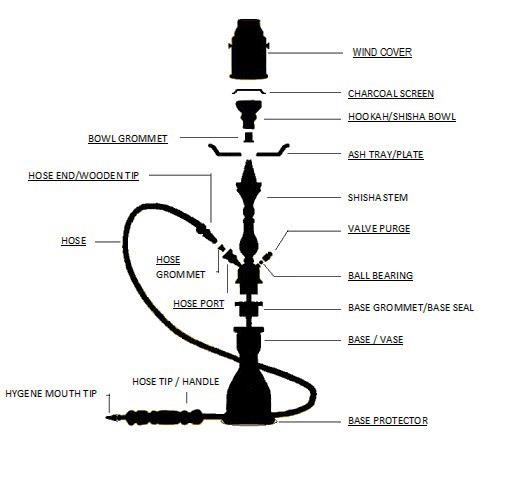
Fig. 2. Typiccal units of a Hubble-Bubble (Author).
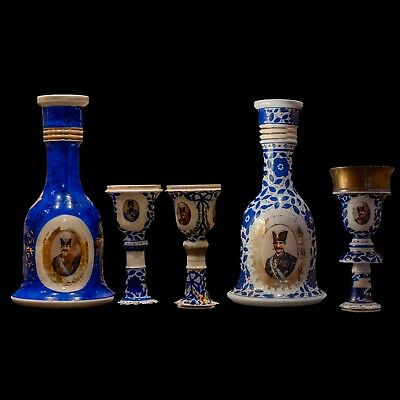
Fig. 3. Typical ornaments of a Qajar Hubble-Bubble (Author).
Hubble-Bubble Varieties
Hubble-bubbles are mostly classified based on their use, size, shape, kind, and place of smoking. The most important kinds include, travel hubble-bubbles with leather pitchers decorated with gold and enamelwork and urban hubble-bubbles (Drouville, 1969: 108) used at homes and mostly bigger, higher and heavier than the ones carried by people. In the past, there were two specified kinds of hubble-bubbles; first, the ones with ordinary pitchers suitable to be used at home and second, Nârgileh hubble-bubbles which were used both at home and outside while riding or walking. The hubble-bubble materials were also different. Its whole parts were sometimes made of gold or silver and were jeweled. The ones made of brass were mostly painted or decorated with gold. A small number of hubble-bubbles were made of metal and most of their pieces were made of different materials (Semsar, 1964: 20). In the hubble-bubble market of Old Tehran, different kinds of them were sold; hubble-bubbles whose pitchers were made of the special blue stone of Khorasan or even of squash peel as well as impressive and luxury ones ornamented with valuable stones like turquoise, sapphire, and olivine (Najmi, 1991: 132). In general, the current hubble-bubbles used in teahouses and houses are very ordinary and cheap on which there is no art work except for the special cases.
Tobacco
«Toutoun» or tobacco is a Turkish word meaning smoke. The word tobacco is derived from «tobâkos» which was a tool for Native Americans to smoke. Although tobacco was brought to Iran by the Portuguese, the method of smoking was changed and Iranians invented some new tools in conformity with their own lives (Semsar, 1964: 15, 14). After the entrance of tobacco into Iran, its commerce became exclusive to the British since 1538 (Chardin, 1995: 707). The imported tobacco was of the highest quality. In Iran, it became common to plant tobacco since early 11th century. The needed tobacco was imported from Kurdistan of Iraq and Baghdad and was mostly planted in Gilan and Kurdistan of Iran (Ravandi, 1990: 7/232). The tobacco consumed by rich people was fragrant and grown in Lar (Drouville, 1969: 106). The second-class tobacco that was less fragrant and caused the throat to itch was the product of Isfahan. The other kinds which were of lower quality and were used by the poor or were exported to Constantinople or Baghdad were from Kashan, Yazd, and etc. (Pulak, 1989: 439). In Qajar era, the best tobaccos were produced in the outskirts of Shiraz, Kashan, and Tabas (Rene Dallemagne, 1958: 86). The consumption of tobacco in Iran sometimes decreased whenever it was banned. It was in 1851 in Nasereddin Shah’s era that tobacco consumption was prohibited in Iran for the last time and the concession of selling tobacco was given to the British Major, Talbot and Co., for 55 years. This concession is known as Reji in Iranian history. It was cancelled in 1891 as the consequence of prohibitions and people’s oppositions (Rezaei, 1995: 118,119). Today, different kinds of tobaccos, whether Iranian or non-Iranian, are used in teahouses and houses. The most famous ones are from Kashan, Shiraz, Khansar, Borazjan, Nain, Biarjomand, and etc. Besides, there are flavored tobaccos with different tastes in Iran.
Hubble-Bubble Using Time
Many hubble-bubble users believe that the smoke is less harmful when it goes through the water. That’s why some people use it even four or five times a day (Shahri, 1999: 440). The best time for smoking is the time of breaking fast and evenings. Hubble-bubble users have accepted it as a habit although they are aware of its harms (Chardin, 1995:709; Tavernier, 1990:639).
Hubble-Bubble ′s Place
People like teahouses, houses, wedding parties, mourning ceremonies, parties, gatherings for the recital of Karbala, passion plays, and summer-quarters the best for using hubble-bubble.
How to Prepare Hubble-Bubble
In the past, some poppy seeds were added to wet tobaccos to make it more effective. Elegant users add some flowers into the pitcher to make the hubble-bubble more beautiful and well-smelling. The water is changed after each use to prevent it from becoming dark or bad smell (Chardin, 1995: 707,708). Some water is poured into the pitcher to prepare the hubble-bubble for smoking. The water shouldn’t be that much to come into the mouth while sucking the tube. If the water amount is suitable, just air comes out of the tube; first, some soaked tobacco is placed on the censer, then the kindled charcoal can be put on it. Next, the conical air trap is used on them. When the censer is prepared, they put it on the top of the body. Finally, the hubble-bubble is ready to be used. Rich people ′s servants prepare their hubble-bubbles and they use a soft spiral pipe instead of the tube. To smooth the tobacco, they wash it twice or three times with water (Drouville, 1969: 106-104). The user sometimes blows into the tube to cause the water to come up into the body to prevent it from getting dry. In some cases, the one in charge of preparing the hubble-bubble (qalyân-čâqkon) soaks the tobacco in tea to make it more effective. Also, in hot days, they put some pieces of ice in the pitcher so that the smoke becomes cool and also the tobacco taste doesn’t change because of the charcoal and water heat. The hubble-bubble not prepared well, whose body isn’t completely wet, is called «jonob». Serving a «jonob» hubble-bubble means disrespect for the guest. (Shamloo, 2005: letter J/288). The one in charge of preparing hubble-bubble puffs it three or four times after it becomes prepared to make it ready for use (Jackson, 1978: 68). In Bahar Town of Hamadan Province, hubble-bubble users add some poppy shell to the tobacco and soak it in a strong tea to give it higher quality.
Perfuming Hubble-Bubble
Hubble-bubble users mostly pour some rose water into the pitcher (especially the rose water from Qamsar in Kashan) or add some fragrant materials or flowers to the water to perfume it (Chardin, 1995: 708; Drouville, 1069: 104; Jackson, 1978: 68; Semsar, 1964: 16; Katiraie, 1999: 132).
Entertaining with Hubble-Bubble
Some rules should be considered while offering hubble-bubble or passing it to someone else. In Qajar era, the host offered his own hubble-bubble if the guest hadn’t brought his own. But, if the host was of a higher rank, the guest didn’t accept it. In this case, accepting the hubble-bubble was an insult to the host. (Rene Dallemagne, 1956: 239). In Old Tehran, the host welcomed his guests by offering hubble-bubble when people gathered for a visit or transaction. The second and third hubble-bubbles were the sign of letting the guests to say goodbye and go. Offering tea and then coffee after the first hubble-bubble meant kindness, respect, and friendship. If there was no hubble-bubble and the host apologized for it, it showed the dissatisfaction from the visit. In parties, people from high ranks asked for the third hubble-bubble to make the companions ready to leave. If a guest ordered the servants to bring a hubble-bubble, it meant vanity and impudence. In the same era, not offering hubble-bubble meant disrespect. Family members didn’t have the right to smoke at the presence of the master unless he let them (Pulak, 1989: 440; Najmi, 1991: 520). In the parties of Old Tehran, as soon as a guest entered, the hubble-bubble that the other guests were smoking was passed to him before offering tea. First, tea, second, coffee, then, hubble-bubble and again tea and coffee with short intervals were respectively and repeatedly offered. The parties weren’t short and the hosts didn’t get tired of these offerings and entertainment (Serena, 1983: 25, 72). In suit ceremonies in Old Tehran, the way of offering hubble-bubble by the bride was very important as one of the stipulations for her to be accepted. Offering hubble-bubble respectfully showed her tact. It shouldn’t be jonob, dry, or leftover with few or too much smoke. It had an effective role in accepting or not accepting the bride (Shahri, 1999: 439).
The Formalities of Using Hubble-Bubble
Smoking by hubble-bubble has its own formalities. In the past, it was indecent of the guest to start preparing his own hubble-bubble before the host offered one. When the hubble-bubble became ready, it was first offered to the well-known guests. They satisfied the offering person by accepting and sucking it. First, the host puffed it once and gave it to one of the guests and it was passed hand to hand to the end of the hall. Everyone gave a short puff and they were careful not to leave any smoke in the pipe when they wanted to pass it. So, they picked the head up and sucked the smoke in the body. Using hubble-bubble was very simple except for the formal ceremonies. The ones who used spiral hubble-bubbles raised the pipe to call the servant to pass it to the next guest. The servant picked the head up to empty the pitcher of smoke; then, he gave it to the one shown by eye (Drouville, 1969: 107). He sometimes held the pipe above the charcoal to purify it to respect the new user. Then, he gave it to him. For a smoker who could keep the smoke in his lungs and give it out slowly through his nose and mouth, five or six puffs were enough to be in a state of euphoria (Pulak, 1989: 441).
Social Formalities of Using Hubble-Bubble
In a ceremony, the first one to whom hubble-bubble was offered was of a higher social rank. The priority in offering hubble-bubble was a sign of the guest’s social rank. Some guests entered in a way that the first hubble-bubble was offered to them to hide their low social rank and some other brought a hubble-bubble holder in advance or with themselves (Shahri, 1999: 6/438). In Nasereddin Shah’s era, tea and hubble-bubble were just offered to special guests and the courtiers in a passion play (Najmi, 1991: 266). In the same period, hubble-bubbles for the religionists were brought before aristocrats (Mostofi, 1963: 312). Among many families, it was common not to smoke before the elders.
Jobs Related to Hubble-Bubble
Any phenomenon of mankind which emerges in a region needs its own agents and creates new jobs. Meanwhile, following the emergence of hubble-bubble and its popularity among Iranians, related jobs were created. Here are some of those jobs:
Servant: He was in charge of making the hubble-bubble ready for others. In the past, he always rode following his master on the trips. He carried the portable hubble-bubble pieces in two boxes hung under his mount. The pitcher and the pipe were usually on one side and the tongs, censer, tobacco and water bottle were on the other side (Drouville, 1969: 105). In Fath-Ali Shah and Nasereddin Shah’s courts, a hubble-bubble completely studded with jewels was offered to the king by a servant in Salam-e-Norouzi ceremonies (Mostofi, 1963: 541).
Hubble-bubble holder: He was in charge of making the hubble-bubble ready and was called «qalyanči». (Anvari, 2002: 6/5585). In Safavid era, when Shah Suleiman wanted to go to his summer quarter, his companions moved following each other while the qalyanči group carried the king’s hubble-bubble at the end of the line (Kaempfer, 1981:239; Rene’ Dallemagne, 1956: 239).
Sar čaqkon: He worked in teahouses and made hubble-bubbles and pipes ready. (Saedian, 1996:128)
Qalyânči: In Old Tehran, «Qahveči» was in charge of making tea, coffee, and hubble-bubble. He had a sack with him full of edibles for the master while traveling. On one side of his mount, he had a brazier full of ablaze charcoal and on the other side the water-skin was hung so that he could make the hubble-bubble ready as soon as his master asked for it (Kulak, 1989: 171). In Nasereddin Shah’s era, well-known traders were followed by some qalyânčis, accompanied with some servants while they moved in the Bazar of Tehran. Qalyânčis carried hubble-bubble and others carried braziers (Serena, 1983: 67). Qalyânčis in «Tekiyeh Dowlat» regularly offered hubble-bubbles and changed their tube heads. They worked in the inner or private parts of houses as well. Because, Iranian women also used to smoke hubble-bubble. (Serena, 1983: 67, 74, 165). In Birjand, some people were in charge of preparing and distributing tea, hubble-bubbles, and the free food during Moharram ceremonies (Barabadi, 2002: 106).
Qalyan čaqkon: In Qajar era, many of the rich always had qalyân čaqkon with themselves who made hubble-bubbles ready for them on the trips or in parties (Shahri, 1999: 6/438).
Qalyân biâr: They were of the servants′ group who accompanied their masters in parties or on trips (Shahri, 1999: 6/321).
Qahveči: The one who made Nasereddin Shah’s hubble-bubble ready was called qahveči (Najmi, 1991: 176).
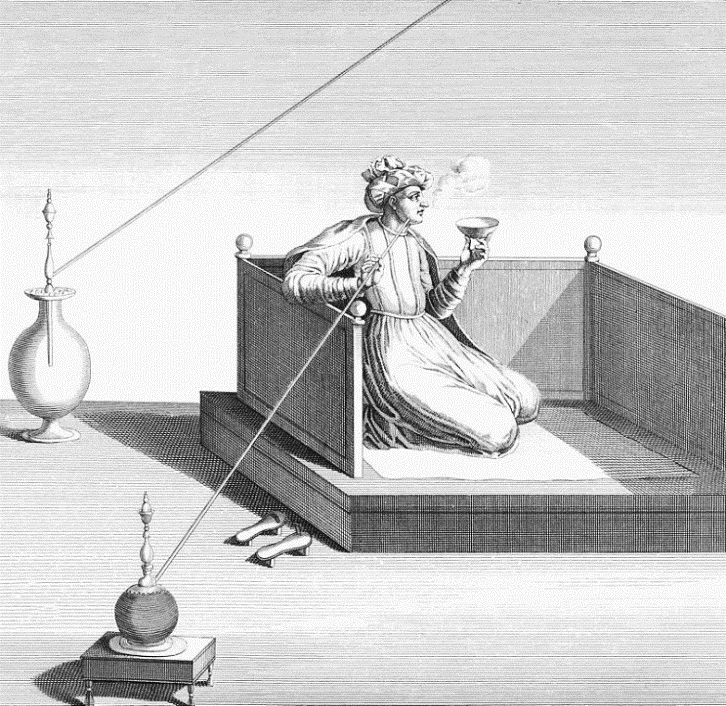
Fig. 4. A paiting form Cherdin’s itinerary depicting a man smoking Hubble-Bubble (Chardin et.al, 1995).
Hubble-Bubble in Traditional Medicine
In the traditional medicine of Iran, some benefits of hubble-bubble have been mentioned besides all of its respiratory and pulmonic harms. The following diseases are among those cured by hubble-bubble:
Sour throat: In Kazeroun, spider’s web, cow gall, starch, and the water of hubble-bubble are mixed and used after getting soft to cure sour throat in children (Hamidi, 1993: 67).
Croup: In Shahindej and Fouman, a gulp of water inside the pitcher is drunk and some of it is spooled to cure croup (Ali Akbarzadeh, 1996:295; Falsafi, 1999:208). In Ardebil, Ahar and Sarab, the patient is made to drink some of the water inside the pitcher which has the smell and taste of tobacco (Falsafi Miyab, 1999: 245; Sepehrfar, 1996: 214). In Khorasan, a sick child is made to eat pounded split peas mixed with the water of the pitcher (which smacks of tobacco) or a part of the child’s fontanel is shaved and scraped at seven points by a razor;then, a white onion is pounded and placed on the scratches after they start bleeding in order to cause it to heal up. Next, some crude split peas are half-pounded and given to the child with one or two spoons of hubble-bubble water (Shakourzadeh, 1984: 244).
Asthma and nausea: Saturated water of hubble-bubble is used as a nauseating drug, especially for curing diseases like asthma (Pulak, 1989: 440).
Parasite: In Dayyer, children are made to drink some hubble-bubble water to cure parasite (Javaheri, 2001: 279).
Otalgia: In most regions, the smoke of hubble-bubble is known to be good for earache (Qolipour Kalmarzi, 2004: 401,404; Javaheri, 2001: 231; Hasani, 2005: 298; Farzin, 1995, 1996: 151; Rashidi Mofrad, 2000: 195; Falsafi, 2001: 214; Mansourizadeh, 1996: 195; Mokari, 2000: 150; Ali Akbarzadeh, 1993:82). In Khorasan, some poppy, coriander, and, opium are placed on the censer and their smoke is blown into the patient’s ear. (Shakourzadeh, 1984: 623). In Abshirin Village, Kashan, opium or coriander is burnt on hubble-bubble then shed into the patient’s ear (Torabzadeh, 1995: 151). In Iranshahr, some water in which tobacco has been soaked is poured into the patient’s ear. This water is also useful for bringing out something stuck in the ear (Janebollahi, 1996:31). The water of hubble-bubble, onion, and the milk of a parturient, which has given birth to a girl, is poured into the patient’s ear (Mirnia, 1999:250).
Stomachache: The people of Momen-Abad Village in Damghan, drink the water in the pitcher to cure stomachache (Hasani, 2004: 208).
Tuberculosis: In Hamadan, a plant called «Bâdiân» is placed on the censer and is smoked like tobacco for 12 days. On the first day, nearly 5 g of it is used; then, about more 5 g is daily added up to the sixth day. Next, they are diminished as they are added (Afshar Sistani, 1992: 786).
Eye infection: In Ramhormoz, the patient’s eye is washed with the water of hubble-bubble left over from the preceding night to cure the infection (Atabaki, 2002: 258).
Toothache: In Ali-Abad Katoul in Gorgan, people smoke hubble-bubble to cure toothache (Nazari Dashliboroun, 2001: 268). In Dashtestan in Boushehr, opium is smoked with tobacco and the burnt opium is placed on the painful tooth (Mansourizadeh, 1996: 195). In Isfahan, a hubble-bubble on which there’s some coriander is smoked to cure toothache (Afshar Sistani, 1999: 408). In Bostan-Abad, the water in which tobacco has been soaked is gargled to prevent the infection of the newly-pulled out tooth (Falsafi, nov2001: 250). In Shahrakht in Qaen, plane-tree mash is placed on hubble-bubble and smoked (Mokarramifar, 1996: 145). Some coriander seed in Momen-Abad in Damghan and some turned barley in Amirieh are placed on hubble-bubble and smoked to relieve toothache (Hasani, 2004: 207).
Suppurated acne: In Abdanan, soaked tobacco is mixed with onion juice and yolk and is placed on suppurating and bloody acne (Salimi Moayed, 2001: 70).
Gonorrhea: In Khorasan, some yogurt is mixed with some water of hubble-bubble left over from the preceding night and is used to wash the genital organ to soothe irritation (Shakourzadeh, 1984: 625).
Childbirth: In Old Tehran, the midwife gave the parturient a hubble-bubble full of water to puff in. This way, the pressure would help her to give birth to the child easier (Katiraie, 1999: 45). In Dashti in Boushehr Province, the parturient smokes hubble-bubble then puffs its smoke into a bottle to facilitate childbirth. If the placenta does not come out, the parturient puffs into the hubble-bubble tube in order to cause it to come out (Mansourizadeh, 1997: 78). In Sepidan, if it becomes late for the fetus to come out and the parturient feels too much pain, a tube is given to her to be puffed in strongly (Sabetghadam, 2006: 320).
Wounds, bleeding and fractures: In Shahroud, tobacco and the dry seed of a plant called «Angour kalâq» are soaked and then smoked by hubble-bubble to cure wounds and cuts (Janebollahi, 1995: 28). In Dashtestan, burnt tobacco is placed on fractures and bloody parts to cure them (Mansourizadeh, 1996:195).
Cupping or pot-using: In Kalateh-khij, Biarjomand, and Dehmolla of Shahroud, some flour is mixed with some hubble-bubble water to make dough. The dough is then placed on the patient’s waist and cupping is done using pots (Hasani, Aug2003: 364).
Louse: In Saravan, tobacco ashes are used to remove the body lice (Barabadi, 1996: 198).
Ringworm: In Sari, patients wash their hair several times with stale water of hubble-bubble to cure their ringworm (Gholipour, 1995: 11).
Bee bite: In Isfahan, some patina of hubble-bubbles and pipes are placed on the bee bite to cure it (Janebollahi, 1993: 25).
Hubble-Bubble in Ceremonies
One can see the strong presence of hubble-bubble in both recreational and spiritual ceremonies as a necessity. For example, in Qajar era, the recital of Karbala was held in theatres for passion-plays. The managers offered tea and hubble-bubbles to those present at night. But, in passion-plays, tea and hubble-bubbles were not offered to the people during the day except for the special guests and the nobles who sat in old chambers (Mostofi, 1963: 404). Some Qajar kings such as, Fathali Shah and Nasereddin Shah used to smoke hubble-bubble in Salâm-e-Norouzi ceremonies (Najmi, 1991: 176; Mostofi, 1963:541). In Old Tehran, a hubble-bubble with a glass pitcher and a silver air trap was a part of the bride’s dowry (Katiraee, 1999: 194). If the bride brought hubble-bubble before the drink and sweets in her suit ceremony, the bridegroom’s family believed that she had brought about bitterness and their son’s life would be bitter. Even some suitors left the ceremony in such cases because hubble-bubble was the symbol of sorrow and mourning (Shahri, 1999: 6/440). In Savojbolagh in Tehran Province, after the agreement between the bridegroom and the bride’s family, the bride’s father appointed a session called «ghalyân-širini» during which the bridegroom’s close relatives and reliable persons went for the suit. In this session, both sides talked about the marriage date, expenses, «širbahâ» and «Mahriya» (Janebollahi, 1994: 75). This custom is called «ghaylân širini» in Khodabandeh in Zanjan (Sepehrfar, 1999: 390,391). In Khorasan, during suit ceremony, the bride’s mother calls her daughter to bring tea and hubble-bubble for the guests. This is a chance for the suitors, who are all women, to see the bride (Shakourzadeh, 1984: 171). In the marriage ceremonies of Isfahan, tea (dry tea), sugar-plum, and a loaf-sugar are offered to all men. Then, tea and hubble-bubble are offered to them and the ceremony is finished (Hoeltzer, 1976:24).
Hubble-Bubble in Calendars
Time management was a significant element among Iranians for the water shortage and some religious obligations. So, they used hubble-bubble at specified intervals. In many regions, the word hubble-bubble has been used to name particular times of a day. Some of the common ones are as follows:
Morning: In Rineh Village in Mazandaran, morning is called «qalyân Nâhâr» (Mallahi, 2001: 26). In Songhor in Kermanshah, breakfast time is called «jhir qalyâni» (zer qelyâni) (Rostami, 1995: 468). It is called «jhir qalyâni» (zi qalyâni) in Ghorveh which consists of tea, bread, and cheese. Breakfast time is called «qalyân âlti» (qalyân âlti) in Turkish areas (Ali Akbarzadeh, 1995: 32). In Khodabandeh, «qaylân âlti» (qaylân âlti) is the morning when people get ready for work (Sepehrfar, 1999: 237). Breakfast time is called «Zafe qalyân» or «Zafe qaylân» in Farsan and Shahrekurd in Chaharmahal & Bakhtiari Province. (Hasani, 1999: 81; Hasani, 1996: 48). Also, in Ardabil, breakfast time and even the breakfast itself are called «qaylân âlti» (Sepehrfar, 1996: 67).
Noon: In Amol of Mazandaran, noon is called «qalyoun Nâhâr» (Mallahi, 2001: 26).
Hubble-Bubble in Poems
Although hubble-bubble does not have a long history, it has had a greatly important role in the people’s daily lives. So, some poets and literary figures have poems about it. For example, the famous poet, Saeb Tabrizi, who was interested in tobacco, has a poem about stopping wine-drinking and smoking hubble-bubble instead. Here is the starting verse:
-I washed the bitter wine on the edge of the bowl; I became content with the bitter smoke rather than the bitter water.
Other poets of the 16th century have poems about hubble-bubble as follows:
-My sorrow is less in solitude, I got disappointed in solitude; Talk to someone but don’t worry if there’s no one; hubble-bubble is enough as your companion in solitude (Baseti)
-If I see the hell fire on the Day of Judgment, I will shout where tobacco is (Bagher Kashi) (Semsar, 15). The following poems are engraved on the pitcher of the silver hubble-bubbles:
-O! My nice sweetheart, come in with hubble-bubble in your hands, give me hubble-bubble with coyness, sit beside me without coyness.
-I am endeared in fire-worshippers’ convent since there is everlasting fire on my head. (Katirae, 1999: 339)
-Hubble-bubble is the best thing as the sugar-plum of any ceremony. I don’t know what the problem of hubble-bubble is that it’s always groaning. It’s like a lover who has fire in his head; he sighs in his heart and there are tears on his lap because of being away from his beloved (Katirae, 1999: 132).
Engraved on Air Traps
-This great hubble-bubble which is like the life-bestowing heaven for its pleasantness is singing like a nightingale in the faithful’s party. Angels’ ears are full of its bubbling noise in the sky (Katiraee, 1999: 339).
-The tube and the bubbling of hubble-bubble are the love because of which I am alive. The only things after that I’ve ever found are writing books and everlasting interlocution (Shahri, 1999: 6/441).
In Kouhbanan of Kerman Province, there is a poem in Najmâ’s story which is exchanged between Najmâ and the girl:
-It’s good I smoke hubble-bubble from time to time not from night to morning; its smoke causes suffocation and its bubbling causes asthma; who has asked you to use it?
The girl answers:
-Hubble-bubble says Yasin chapter of the Quran, the tube says «nâde-Ali» in my mouth. The hubble-bubble says Allah, Mohammad and Ali with each breath.
In this story, the girl walks out in the protest after singing the above-mentioned poem (Rahjou, 2006: 643).
In Abdanan in Ilam, «čel Souroa» fortune is told. The following verse related to hubble-bubble is the Farsi translation of one of the forty verses of the fortune:
O! David Excellency. My Majesty! Deliver my daily portion of hubble-bubble so that I can have the tobacco seller as my guest (Salimi Moayed, 2001: 326).
Turkmens sing the following poem when a girl is going to marry and go to another tribe or area while she doesn’t want to:
O! The one smoking hubble-bubble! Put it away; extinguish its fire; discard its ashes; you have something more important to do; and it’s pulling the one’s tongue out of his mouth who lets his daughter marry a stranger (AzamiRad, 2003: 19, 20).
Hubble-Bubble in Proverbs
In Iran, like in any other country, proverbs are used to state an informative story or a lesson in brief which prevents long explanations. Many of these stories have been forgotten and people mostly don’t know anything about the backgrounds of some proverbs but they use them. The older a civilization, the more numerous the events and stories; so, one can find many Persian proverbs. The penetration of hubble-bubble and tobacco in Iranians’ lives has caused the widespread use of these two words in the Persian proverbs. Here are some examples of common proverbs in Iran:
-Strainer ridicules hubble-bubble and says you have just two holes (Hasani, 2000: 351; Mazareian, Nov1996: 386).
-He’s become like a hubble-bubble tube (Andalib Semnani, 2004: 568).
Hubble-Bubble in Riddles
In a riddle, one hears the description of something while its name is not mentioned, it may be guessed. Riddles are among the oldest parts of the oral literature; they are very popular.
The emergence of the riddles related to hubble-bubble dates back to the time when riddle-makers found out the importance of hubble-bubble to the people. There are some of these riddles as follows:
-I saw a strange being in which water was bubbling under fire (Torabzadeh, 1995: 268; Mazareian, May1996: 320; Hasani, 1994: 155).
-I saw a strange being on the bridge in which water was bubbling under fire (Gholipour Kalmarzi, 2001: 352).
-I saw a strange being in this plain, water cruising under fire (Hashemi, 2008: 170; Gholipour Kalmarzi, 2004: 495; Nemati, 2006: 216).
-I saw a strange being on this hill, water bubbling under fire (Azizi, 2004: 277).
-I saw a strange being in this plain, water bubbling under fire (Sabetghadam, 2003: 279).
-What’s that on which there’s fire lightening, under which there’s water bubbling (Salari, 2000: 380).
Hubble-Bubble in Foretelling
In the past, there were different ways of foretelling and one of them was using hubble-bubble. It was done as follows:
A hubble-bubble or a candlestick or an air trap on which the names of four angels are written is used to find thieves. The suspect persons’ names are written on small pieces of papers to be placed on the air trap one by one. Then, they concentrate on their wish and two people, reading Quran, pick the air trap up. If the air trap turns, the one whose name is written on the air trap is the thief (Hedayat, 1977: 37, 38).
Hubble-Bubble in Beliefs
Belief is people’s mentality about something in which they have faith. Thus, considering the beliefs in hubble-bubble, it can be said that it has been very important to the people. Below are some of these beliefs:
-In Khorasan, someone who prepares hubble-bubble should give it several puffs to make the tobacco burn properly and cause the pitcher to become full of smoke. Otherwise, the user’s face will get yellow (Shakourzadeh, 1984: 322).
-The people of Golbaf in Kerman Province pour the water of hubble-bubble around their houses or rooms because they believe that it counteracts any magic (Asadi Gouki, 2000: 287).
-If the tube falls into the pitcher, the smoker will gain some money provided that he brings it out, kisses its head, and puts it in its place again.
-If hubble-bubble sounds and sparks, some guests would come.
- Someone who is beaten by hubble-bubble tube will get thin.
-Old women become so small that they can sit in hubble-bubble tube and knit a basket when Resurrection is close.
-Hubble-bubbles shouldn’t be used at the time of transition to New Year (Hedayat, 1977:57, 68,138).
Conclusion
Although many Iranian researchers know Iran as the origin of hubble-bubble, some anthropologists and historians such as «Rudi Matti» believe that based on the appearance and history of hubble-bubble, it is originated from India and has been invented there; but, Iranians met it warmly and it became very popular in Iran. Using hubble-bubble was not dedicated to a particular group and all Iranians used it. The only difference was in the material and ornaments. The hubble-bubbles for the poor were simple and cheap but the ones for the rich were made of glass, decorated with gold and silver. Therefore, hubble-bubble could show the people’s social ranks. Aristocrats employed poor people as hubble-bubble holders, carriers, makers, and servers and as the servants and coffee servers. Offering hubble-bubble was a part of entertaining guests and Iranian culture. Hubble-bubble was so popular that sometimes became a significant element in the political and religious fields. Hubble-bubble and tobacco also had great effects on the folkloric literature and some rituals. One can see these two words in lullabies, poems, traditional medicine, proverbs, stories, and etc. Today, although there are cigarettes and they are much easier to use, hubble-bubble is popular yet, considering flavored tobaccos. In the past, just the elders used hubble-bubble and natural tobaccos in the ceremonies; but, today, the youth use hubble-bubble and flavored tobaccos as well. Hubble-bubble and tobacco are correlative and tobacco plays an important role in the personal, social, financial and political aspects of the people’s lives. Research has been accomplished about how hubble-bubble entered Iran and became popular but still there are some disagreements in this regard. As mentioned above, flavored tobaccos are used and there are several flavors such as, apple, peach, coconut, strawberry, and etc. Today, unlimited and addictive consumption of hubble-bubble by the youth has caused concerns for the ones in charge of public health. The main reasons for hubble-bubble popularity include, being economical and easy access to it. Tobacco decreases stress and removes tiredness; so, the friends who are used to smoke tobacco can easily attract their friends to hubble-bubble. Useful programs such as exercise and teaching methods of controlling stress and tiredness can decrease the rate of hubble-bubble consumption; but, first we should accept this phenomenon as a social fact.
Acknowledgements
The authors thank all those who helped them writing this paper.
Conflicts of Interest
Authors declared no conflict of interests.
Received: 2019/03/4 | Accepted: 2019/07/10 | Published: 2019/09/1
| Rights and permissions | |
 |
This work is licensed under a Creative Commons Attribution-NonCommercial 4.0 International License. |